
Why Is Footwear Inspection Essential for Global Buyers?

For global buyers, Footwear Inspection is more than a final visual check. It is a practical safeguard against inconsistent materials, unsafe construction, and costly customer complaints. A trained inspector may examine leather grain, stitching density, outsole bonding, size markings, color consistency, and packaging accuracy. Small details matter. A loose thread can signal rushed production. A slightly uneven sole may affect comfort, durability, or brand reputation.

Quality expert W. Edwards Deming stated, “Quality comes not from inspection, but from the improvement of the production process.” His principle remains highly relevant to footwear sourcing. Inspection should not merely reject defective pairs. It should reveal why defects appeared and whether the factory can correct them. Buyers need clear inspection criteria, representative sampling, calibrated measuring tools, and photographic evidence. They also need inspectors who understand footwear construction, not only general product checking.

The process is not perfect. Sampling cannot identify every hidden weakness. Some bonding failures appear only after repeated flexing. Material shade differences may seem acceptable under factory lighting but fail under daylight. These limitations deserve honest attention. A reliable inspection program therefore combines factory audits, in-line checks, final random inspections, and documented corrective actions. It connects factory experience with measurable evidence.

For international buyers, this approach supports better purchasing decisions and more stable quality. It can reduce rework, shipment delays, returns, and avoidable disputes. Yet inspection alone cannot replace responsible supplier selection. Strong results come from cooperation, consistent standards, and the willingness to question comfortable assumptions.
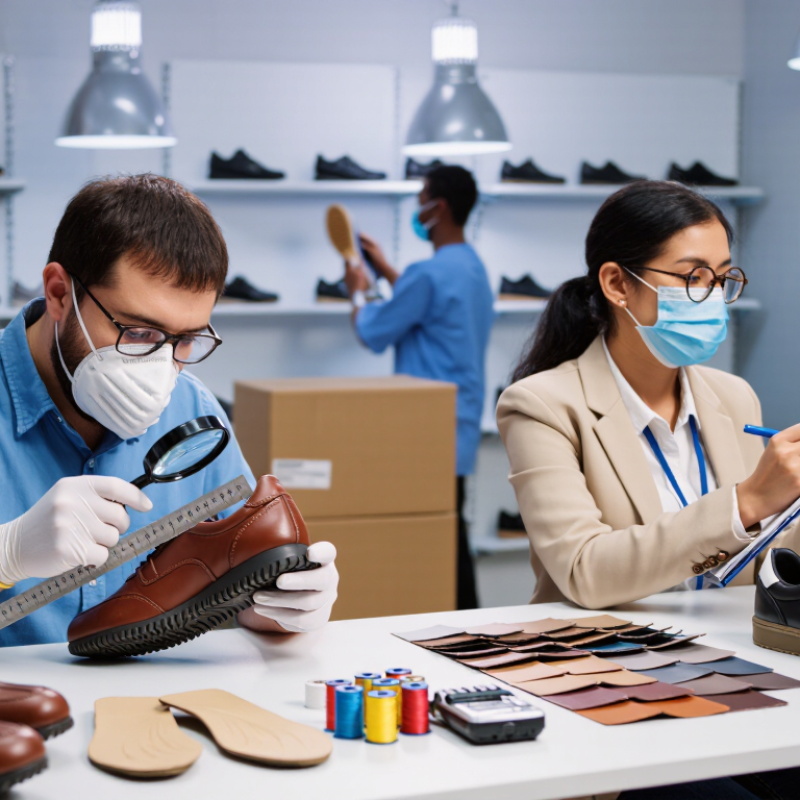
Why Is Footwear Inspection Essential for Global Buyers?

The Role of Footwear Inspection in International Trade

Why Is Footwear Inspection Essential for Global Buyers?

The Role of Footwear Inspection in International Trade

International trade depends on documents, but footwear quality is proven through physical details. For global buyers, inspection confirms whether delivered shoes match approved samples, technical files, and purchase terms. Qualified inspectors check size grading, stitching, bonding, surface finish, labeling, packaging, and pair matching. Small defects matter. A loose thread may signal rushed production, while uneven soles can affect comfort and returns.

Inspection also creates reliable evidence between parties separated by distance. Inspectors record measurements, defect photos, carton counts, and factory observations using consistent sampling methods. These records help buyers compare shipments and discuss corrective action with suppliers. A practical report should identify the defect, its location, severity, and likely production cause. Vague comments rarely improve the next shipment. Independent inspection cannot replace responsible sourcing or clear specifications. This is often overlooked.

In practical inspection work, checks are useful before mass production, during production, and before shipment. An early sample review may expose an unsuitable last or weak adhesive before thousands of pairs are made. During production, checks can reveal color variation, size drift, or packaging changes. Final inspection then verifies quantity and readiness. Still, inspection has limits. Sampling may miss hidden faults, and rushed corrections can create new problems. Inspectors can also disagree when criteria are unclear. Buyers should review defect trends and question results that lack measurable evidence.

Why Is Footwear Inspection Essential for Global Buyers?

This chart shows the maximum number of defective pairs accepted in a sample of 200 pairs from a footwear lot of 3,201–10,000 pairs, using ANSI/ASQ Z1.4 General Inspection Level II. As the AQL becomes stricter, the acceptance number decreases, helping international buyers control quality risks before shipment.

Reference: ANSI/ASQ Z1.4 attribute-sampling tables; acceptance numbers shown for a sample size of 200.

Key Quality and Safety Checks for Global Footwear Buyers

Footwear inspection is essential for global buyers because appearance alone cannot confirm quality or safety. Experienced inspectors check each production batch against approved samples, specifications, and purchase requirements. They examine stitching density, loose threads, uneven edges, material thickness, and color consistency. Small defects often become visible under bright inspection lights.

Safety checks require closer attention. Inspectors test outsole bonding, heel stability, flexing performance, and slip resistance where applicable. They also check sharp components, broken eyelets, strong chemical odors, and uncomfortable internal seams. Size measurements matter too. A one-centimeter difference can affect fit, returns, and customer trust. Packaging should protect the footwear from moisture, crushing, and contamination during shipment.

Inspection is not a perfect shield. A random sample may miss a hidden defect. That weakness deserves honest discussion. Buyers should define sampling levels, photograph findings, and keep dated inspection records. Independent laboratory testing may support checks for restricted substances or material safety, depending on the market. I have found that clear inspection criteria prevent more disputes than hurried final checks. Still, factory conditions can change after inspection. Follow-up controls remain valuable, especially for repeated orders. Reliability comes from consistent evidence, not one attractive sample.

How the Footwear Inspection Process Works Step by Step

For global buyers, footwear inspection turns a factory promise into measurable evidence. The process starts before an inspector touches a shoe. Buyer and supplier confirm materials, size ranges, quantities, and acceptable quality limits. The inspector then selects cartons using a defined sampling plan, rather than choosing attractive pairs. This matters. Easy pairs can hide uneven production.

During the physical check, the inspector compares each shoe with approved specifications. They examine stitching, bonding, surface marks, color consistency, and pair matching. They measure length, width, heel height, and other key dimensions. Hands test flexing, closure strength, and sole attachment. Odor, loose threads, sharp edges, and dirty insoles also receive attention.

Packaging follows. Carton labels, tissue, accessories, and size assortments must match shipping documents. Findings are recorded with photographs, defect counts, and location details. A clear report separates critical, major, and minor issues. However, judgment can vary. Borderline defects need photos and a second review.

Tips: Keep an approved reference sample at the inspection site. Give inspectors a defect guide with real photographs. Ask for measurements, not vague comments such as “looks fine.” Schedule inspection before final payment or dispatch, when correction remains practical. Recheck repaired pairs. A quick visual pass can miss weakened glue. Small mistakes often grow.

Common Risks Identified During Footwear Inspections

Why Is Footwear Inspection Essential for Global Buyers?

Common Risks Identified During Footwear Inspections

Footwear inspections help global buyers identify problems before products leave the factory. In practical inspections, common risks include uneven stitching, loose threads, weak bonding, and visible glue marks. A shoe may look attractive from a distance. Close inspection often reveals more.

Inspectors check size consistency, color matching, outsole attachment, heel balance, and surface scratches. They also compare production samples with approved specifications. A left shoe measuring differently from its right pair can create customer complaints. Crushed toe boxes and damp cartons may also damage products during transport. Small details matter.

Packaging creates another risk. Incorrect labels, missing accessories, and mixed sizes can delay warehouse operations. Functional checks are useful too. Inspectors may bend soles, pull eyelets, and examine fastening strength. These checks cannot predict every problem. They reduce avoidable surprises.

That sounds simple. It is not.

Inspection results depend on sampling, lighting, testing methods, and inspector judgment. A professional report should record defect photographs, measurements, sample quantities, and clear acceptance decisions. Buyers should review repeated defects instead of treating each shipment as a separate event. Patterns often reveal weak factory controls.

No inspection catches everything. Still, careful footwear inspection gives buyers evidence for better decisions and stronger production follow-up.

How Inspection Results Support Global Purchasing Decisions

Footwear inspection turns factory findings into evidence for global purchasing decisions. The World Footwear 2024 Yearbook reported approximately 22.4 billion pairs produced worldwide in 2023. Production remains highly concentrated in Asia, making consistent verification essential across distant supply chains.

Inspection results help buyers compare factories using measurable facts, not promises. Reports can record upper material, stitching, sizing, outsole bonding, flex resistance, color consistency, and carton strength. AQL sampling under ISO 2859-1 also creates a common quality language. These details support decisions about order approval, corrective action, shipment release, or supplier review. The 2023 NRF and Appriss Retail report estimated a 14.5% retail return rate in the United States. It was not footwear-specific, but poor fit, visible defects, and damaged packaging can increase return pressure. Inspection cannot predict every customer complaint. It can expose avoidable risks before products travel thousands of kilometers.

Tips: Request photo evidence beside measurement tools. Compare inspection results with approved samples and purchase specifications. Track repeated defects by factory and product line. Do not treat a passed report as perfect; sampling can miss isolated failures. That limitation deserves attention. A practical buyer should review defect patterns, not only the final pass or fail.

Leading and shaping the future of endodontics globally is our life’s work.