
Sourcing Alzheimer’s disease biomarkers requires more than ordering a promising assay. It demands careful questions, verified suppliers, and a realistic view of clinical evidence. The strongest programs examine sample quality, analytical validity, reproducibility, regulatory status, and long-term availability. Small details matter. A frozen plasma tube may carry different risks from a fresh cerebrospinal fluid sample.
Maria C. Carrillo, Ph.D., Chief Science Officer of the Alzheimer’s Association, has described blood-based biomarkers as “a potential game changer for Alzheimer’s detection and research.” Her observation captures both opportunity and responsibility. Biomarkers Of Ad can support earlier evaluation, improve trial enrollment, and help researchers track disease biology. They do not replace clinical judgment. Not yet.
This guide presents 10 practical tips for sourcing Alzheimer’s disease biomarkers. It considers vendor credentials, assay documentation, validation cohorts, reference standards, and data transparency. It also addresses consent, privacy, transport conditions, and batch effects. These issues may seem operational, but they can distort results before analysis begins. A reliable supplier should explain failure rates, storage requirements, and quality controls without vague promises.
Some recommendations remain imperfect. Biomarker performance can vary across populations, laboratories, and disease stages. A test that performs well in one study may weaken elsewhere. That uncertainty deserves attention, not polished marketing language. Buyers should document assumptions, challenge attractive claims, and request evidence they can independently review. Careful sourcing is slower. It is usually safer, more reproducible, and more scientifically defensible.
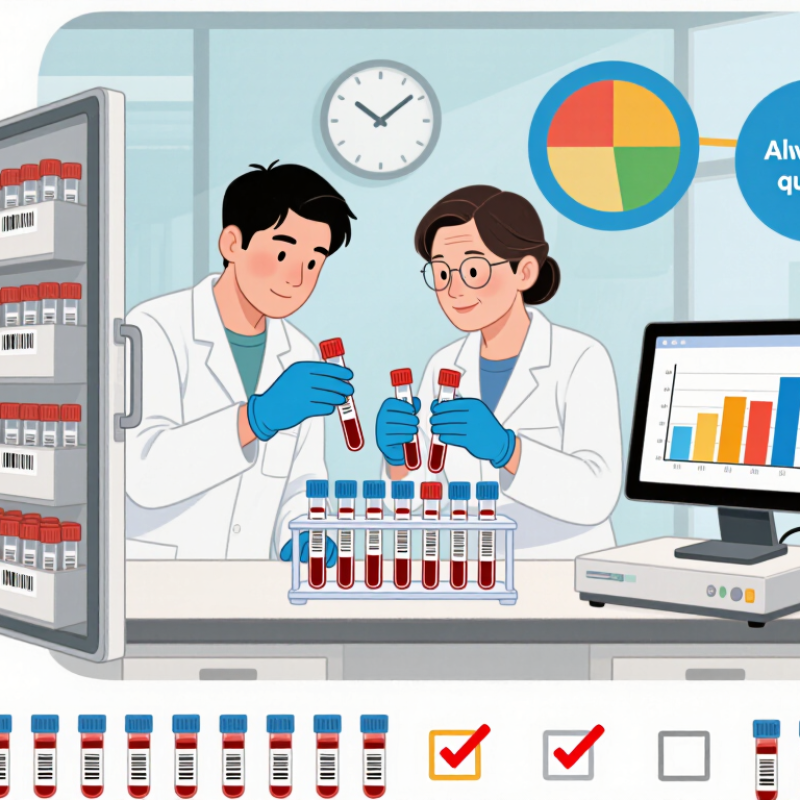
Alzheimer’s biomarker sourcing should begin with a research question, not a specimen list.
Define whether the goal is early detection, differential diagnosis, prognosis, or treatment monitoring. Each purpose demands different evidence. A screening marker may need high sensitivity in community samples. A monitoring marker must change reliably over time.
Keep it measurable. Specify the target population, disease stage, comparator group, and intended clinical decision. Practical teams should also define acceptable sample types, collection timing, and minimum data quality before recruitment begins.
A credible plan connects biomarkers to a biological hypothesis.
Amyloid, tau, neurodegeneration, and inflammation may answer different questions. Select markers based on mechanism and clinical relevance, not novelty alone. Write primary and secondary endpoints before testing.
Preanalytical variables matter: fasting status, tube type, processing delay, and storage temperature can alter results. Record them carefully.
Use an independent validation cohort and, when possible, repeated samples from the same participants. This approach tests both measurement stability and individual change.
Reliable sourcing also requires transparent inclusion criteria, balanced demographics, informed consent, privacy protection, and documented sample handling.
Assay precision should be checked with controls, blinded replicates, and predefined missing-data rules. I would not claim success from a small, convenient cohort. That shortcut is tempting.
It may hide effects linked to age, disease stage, or comorbidities. Research goals can be revised after pilot data, but every change should be logged and justified.
A useful biomarker must answer a defined clinical question consistently.
10 Tips for Sourcing Alzheimer’s Disease Biomarkers
Reliable biomarker evidence begins with traceable data, not polished claims. The 2024 Alzheimer’s Disease Facts and Figures report estimates that nearly 7 million Americans aged 65 and older live with Alzheimer’s disease. That scale demands careful sourcing. Check whether a study defines its cohort, diagnostic criteria, sample timing, and storage conditions. Small details matter. A frozen plasma sample is not automatically comparable to fresh cerebrospinal fluid.
Prioritize peer-reviewed studies with independent replication, prespecified outcomes, and transparent assay validation. Look for sensitivity, specificity, confidence intervals, and missing-data rates. A 2023 World Health Organization report estimated that more than 55 million people worldwide live with dementia, yet biomarker performance can vary across ancestry, disease stage, and clinical setting. Do not treat one impressive statistic as universal evidence. Compare results across population-based cohorts, clinical trials, and real-world memory clinics.
Use original datasets when possible, then verify the publication date and correction history. Record the laboratory method, cutoff value, reference standard, and conflicts of interest. A systematic review can reveal consistency, but it may inherit weaknesses from the studies it includes. One gap in my own sourcing checklist is overvaluing large sample sizes. Bigger is not always better. A poorly harmonized cohort can produce precise, misleading results. Reliable sourcing also requires contacting investigators when protocols remain unclear and documenting every decision before the evidence enters a clinical or research workflow.
| No. | Sourcing Tip | Biomarker Evidence Dimension | Reliable Evidence Indicators | Useful Data Fields to Capture | Key Limitation |
|---|---|---|---|---|---|
| 1 | Start with the biological target. Confirm that the source measures a feature directly linked to Alzheimer’s disease biology. | Amyloid pathology, tau pathology, neurodegeneration, or neuroinflammation | Clear description of the biological analyte, disease pathway, specimen type, and relationship to the clinical phenotype | Analyte name; target pathway; specimen matrix; collection timing; intended use | Biological association does not by itself establish diagnostic accuracy or clinical utility. |
| 2 | Prioritize well-characterized core biomarkers. Give early attention to measures with substantial independent evidence. | Core Alzheimer’s disease biomarkers | Cerebrospinal fluid amyloid-beta 42 or amyloid-beta 42/40 ratio, phosphorylated tau, amyloid positron-emission tomography, and tau positron-emission tomography are described with validated disease associations. | Biomarker class; assay or imaging method; positivity definition; reference standard; diagnostic population | Results can vary according to assay platform, tracer, cut point, and study population. |
| 3 | Check analytical validity before clinical claims. Determine whether the measurement itself is accurate and reproducible. | Analytical performance | Reported precision, repeatability, reproducibility, analytical sensitivity, specificity, linearity, interference testing, and specimen stability | Coefficient of variation; limit of detection; quality-control procedures; storage conditions; freeze-thaw cycles | High analytical performance does not guarantee accurate classification of Alzheimer’s disease in routine care. |
| 4 | Look for independent replication. Prefer findings reproduced by separate research groups and cohorts. | External validity and reproducibility | Replication across institutions, geographic regions, laboratories, disease stages, and participant demographics | Number of cohorts; sample size; independent validation status; population overlap; performance consistency | A biomarker may perform well in a research cohort but less well in heterogeneous clinical populations. |
| 5 | Evaluate the reference standard. Confirm how Alzheimer’s disease status was established. | Diagnostic ascertainment | Use of biomarker-confirmed classification, standardized clinical assessment, longitudinal follow-up, or neuropathological confirmation where available | Reference standard; disease stage; follow-up duration; comparator groups; adjudication process | Clinical diagnosis alone may misclassify participants because several dementias share symptoms. |
| 6 | Compare blood biomarkers with established measures. Treat plasma markers as complementary until their intended use is clearly supported. | Plasma phosphorylated tau, plasma amyloid-beta, neurofilament light, and glial fibrillary acidic protein | Direct comparison with cerebrospinal fluid biomarkers, amyloid or tau imaging, or a validated clinical reference standard | Plasma concentration; assay method; diagnostic accuracy; positive and negative predictive values; renal function; age | Blood concentrations may be influenced by kidney function, comorbidities, age, and pre-analytical handling. |
| 7 | Inspect pre-analytical procedures. Confirm that specimen collection and processing were standardized. | Specimen integrity and handling | Documented fasting status, collection tube, centrifugation, transport temperature, processing interval, storage duration, and freeze-thaw history | Collection time; tube type; processing delay; storage temperature; number of freeze-thaw cycles | Uncontrolled handling can create apparent biomarker differences unrelated to disease biology. |
| 8 | Review statistical performance, not only significance. Seek clinically interpretable accuracy estimates. | Diagnostic and prognostic performance | Area under the receiver operating characteristic curve, sensitivity, specificity, likelihood ratios, calibration, confidence intervals, and decision-curve results | Cut point; prevalence; sensitivity; specificity; confidence interval; calibration; net benefit | Predictive values change with disease prevalence and may not transfer directly between settings. |
| 9 | Assess confounding and fairness. Check whether performance remains reliable across relevant subgroups. | Bias, generalizability, and subgroup performance | Prespecified analyses by age, sex, race or ethnicity, education, renal function, comorbidity, disease stage, and cognitive status | Subgroup sample size; missing data; adjustment variables; interaction effects; performance by subgroup | Evidence from highly selected populations may not represent underserved or medically complex groups. |
| 10 | Confirm clinical utility and evidence maturity. Separate promising research markers from measures ready to guide care. | Clinical utility, readiness, and intended use | Prospective studies showing effects on diagnosis, treatment selection, patient outcomes, workflow, safety, or health-economic value; transparent reporting of evidence limitations | Intended-use population; clinical decision; outcome measured; prospective or retrospective design; evidence maturity; implementation requirements | A statistically strong biomarker may still lack evidence that using it improves patient outcomes. |
Evidence categories reflect commonly used Alzheimer’s disease biomarker frameworks: amyloid pathology, tau pathology, neurodegeneration, and associated biological processes. Biomarker performance should be interpreted together with clinical history, cognitive assessment, imaging, comorbidities, and the intended clinical decision.
A credible Alzheimer’s disease biomarker starts with a clearly defined clinical purpose. Is it detecting pathology, tracking progression, or supporting treatment decisions? The answer shapes every sourcing choice. Examine the biological target, assay method, sample type, and disease stage. A promising signal can weaken when blood handling changes. Small details matter.
A practical review should check analytical accuracy, sensitivity, specificity, and repeatability. It should also examine the study population, including age, comorbidities, medications, and cognitive status. Strong evidence comes from well-described cohorts and independent validation. One small study is not enough. Compare findings across laboratories and platforms. Review missing data, threshold selection, and possible conflicts of interest. The numbers may look impressive, yet clinical usefulness can remain uncertain.
Clinical relevance requires more than statistical significance. Ask whether the biomarker improves diagnosis, risk assessment, monitoring, or patient communication. Does it change a clinical decision? Can healthcare teams access it safely and consistently? Consider cost, turnaround time, sample burden, and performance in diverse populations. Real-world evidence is essential, but it is often limited. That weakness should be stated plainly. Biomarker evidence also evolves, so sourcing teams should record publication dates and update reviews regularly. A cautious decision today may need revision tomorrow.
Sourcing Alzheimer’s disease biomarkers starts with matching the platform to the specimen. Plasma is accessible, but analyte levels can be extremely low. Cerebrospinal fluid offers closer biological access, yet lumbar puncture can limit recruitment. Brain imaging adds regional information, though scanners, tracers, and reader training increase complexity. I have seen promising signals weaken after repeated freeze-thaw cycles. Sample logistics deserve equal attention.
Immunoassays can process many samples with modest volume requirements. They are practical for screening, but matrix effects require suitable controls. Antibody specificity also needs independent verification. Mass spectrometry may distinguish closely related peptides more clearly. It often requires larger volumes, skilled preparation, and strict calibration. Digital PCR suits nucleic-acid targets and can detect rare molecules. It requires stabilized specimens and careful contamination control. No platform is perfect.
For each project, record tube type, collection time, processing delay, storage temperature, and freeze-thaw count. Define the minimum volume before recruitment begins. Plasma workflows may need 0.5–1 mL per time point, but the laboratory protocol should decide. CSF studies often require several hundred microliters for testing and repeats. Imaging projects need different controls, including acquisition settings and reader agreement. Use blinded duplicates, pooled controls, and reference samples when possible. A practical compromise may be imperfect. That should be documented, not hidden. Orthogonal testing can expose assay bias before it affects clinical interpretation.
Sourcing Alzheimer’s disease biomarkers is not only a laboratory task. It is a trust exercise involving patients, families, clinics, and data teams. The World Health Organization’s Global Status Report on the Public Health Response to Dementia estimates that more than 55 million people live with dementia worldwide. Nearly 10 million new cases occur annually. That scale makes responsible evidence collection urgent. Tip 1: Explain study purpose, storage, and future sharing clearly. Tip 2: Re-consent when research goals materially change. Our forms can still feel too dense. That weakness deserves attention.
Biomarker quality begins before laboratory analysis. Researchers should document collection time, tube type, transport temperature, processing delays, freeze-thaw cycles, and missing clinical details. The 2024 Alzheimer’s Disease Facts and Figures report estimates that 6.9 million Americans aged 65 and older live with Alzheimer’s disease. This burden increases research pressure, but pressure must not reduce validation standards. Tip 3: Use blinded duplicates and external proficiency testing. Tip 4: Record assay batches and exclusion reasons. A clean spreadsheet is not proof. Outliers may reflect biology.
Cross-site collaboration needs shared definitions and honest communication. The 2023 revised biological criteria for Alzheimer’s disease emphasize biomarker-based staging rather than symptoms alone. Tip 5: Pre-register endpoints and sample-handling rules. Tip 6: Share de-identified metadata with clear access controls. Ethical review should address unequal representation, incidental findings, and understandable result communication. We have not solved these issues perfectly. Transparent disagreement can still improve reproducibility.
Managing ethics, data quality, and research collaboration
The chart summarizes established example modalities in the NIA-AA AT(N) research framework: amyloid biomarkers include CSF Aβ42/40 and amyloid PET; tau biomarkers include CSF phosphorylated tau and tau PET; neurodegeneration biomarkers include structural MRI, FDG-PET, and CSF total tau. These counts describe example modalities, not diagnostic recommendations or comparative performance.
Sources: Jack et al., NIA-AA Research Framework, Alzheimer’s & Dementia (2018); National Institute on Aging and Alzheimer’s Association revised diagnostic criteria (2024).
DENTSPLY Maillefer - USA
5100 E. Skelly Drive, Suite 300
Tulsa, Oklahoma 74135
DENTSPLY Maillefer - Canada
161 Vinyl Court
Woodbridge, ON L4L 4A3
Toll-free in the U.S.:
1-800-924-7393
Toll-free in Canada:
1-800-263-1437
Toll-free in the U.S.:
1-800-924-7389
Toll-free in Canada:
1-888-336-8775