
How to Test Gold and Silver for Purity in 2026?

How to Test Gold and Silver for Purity in 2026? begins with a simple fact: appearance can deceive. Bright color, polished surfaces, and familiar stamps do not prove metal content. Reliable Gold Silver Testing combines observation, measurement, and suitable technology. It also requires patience.

Metallurgist and precious-metals specialist Chris Corti has emphasized a practical principle: “A test result is only as reliable as the method and the sample.” This idea matters in 2026, when buyers, refiners, collectors, and jewelry professionals increasingly use digital scales, electronic testers, X-ray fluorescence, and laboratory analysis. Each method has limits. Some tests examine only the surface. Others require careful calibration or trained interpretation.

This guide explains how to test gold and silver without relying on one dramatic result. You will see how density checks, magnet tests, acid testing, and XRF analysis differ. You will also learn why sampling location matters, especially on plated objects or hollow jewelry. A heavy item may still contain a misleading outer layer.

Be careful with assumptions. A hallmark can be useful, but it is not absolute proof. A nonmagnetic response is informative, but it does not confirm purity. Even experienced testers can make mistakes when equipment is poorly maintained. The most dependable approach compares several findings and records them clearly. When the value is significant, an accredited laboratory remains the safest reference. Testing is not about finding a quick answer. It is about building confidence from evidence.
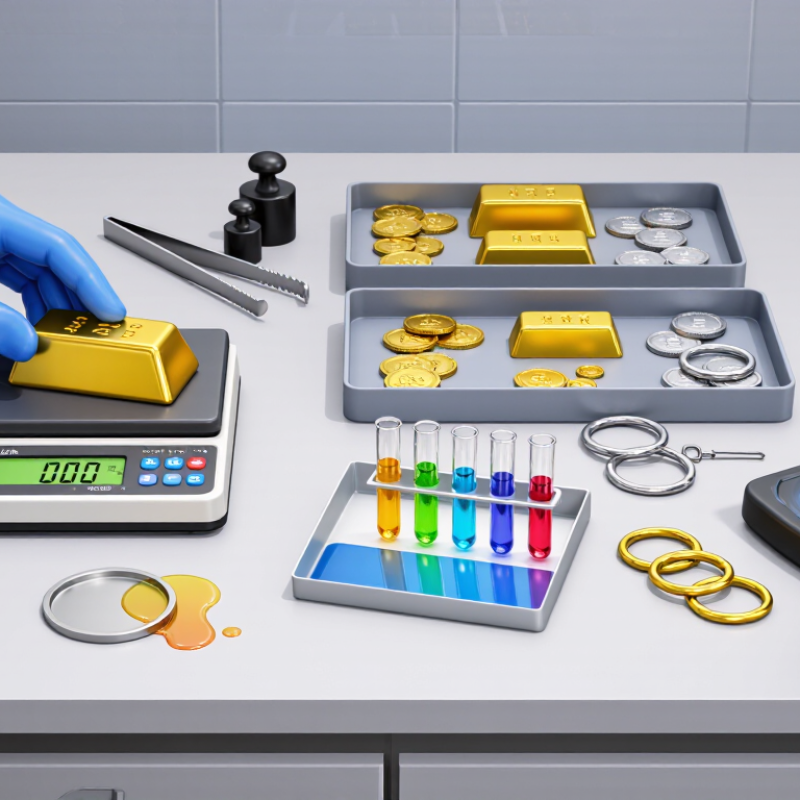
How to Test Gold and Silver for Purity in 2026?

Understanding Gold and Silver Purity Marks and Standards

How to Test Gold and Silver for Purity in 2026?

Purity marks are the fastest starting point. Gold may show 999, 916, 750, or 585, representing 24K, 22K, 18K, and 14K standards. Silver commonly carries 999, 925, or 800 marks. A small “925” stamp means 92.5% silver, not pure silver. Marks can be worn, copied, or misunderstood. Treat them as clues, never final proof.

Use a 10x loupe to inspect the stamp, edges, solder lines, and plating wear. A magnet can expose some base-metal items, but it cannot confirm genuine gold or silver. Acid testing is more informative, yet it removes a tiny surface mark and may miss thick plating. X-ray fluorescence testing is quick and non-destructive, but it mainly reads the surface. For valuable pieces, request an independent assay and a written result. Fire assay remains a highly accurate reference method, although it requires sampling.

Market data explains why careful testing matters. The 2024 Gold Demand Trends report recorded nearly 5,000 tonnes of global gold demand, including over-the-counter activity. The 2025 World Silver Survey reported 680.5 million ounces of industrial silver demand in 2024. Demand is broad, and recycled material is not always uniform. I have found that a clean hallmark can create false confidence, especially on older jewellery. Weight, dimensions, density, and laboratory results should agree. When they do not, pause before assigning a purity grade or price.

Preparing the Item and Tools for Accurate Purity Testing

Before testing gold or silver in 2026, prepare the item carefully. Handle it with clean cotton gloves to prevent oils from changing surface readings. Record its weight, dimensions, markings, and visible damage under neutral light. A soft brush can remove loose dust, but avoid aggressive polishing. It may erase evidence.

Use a calibrated digital scale, a 10x loupe, a strong magnet, distilled water, and a clean testing stone. For more reliable results, prepare certified reference samples and check the instrument before each session. X-ray fluorescence testing can examine composition without cutting the item, while acid testing usually requires a small, controlled touchstone mark. Never test plated areas alone. They can produce misleading results.

The World Gold Council reported 4,974.5 tonnes of total gold demand in 2024, showing why dependable verification matters across a large market. The Silver Institute’s World Silver Survey 2025 recorded 680.5 million ounces of industrial silver demand in 2024. Mixed alloys and coatings therefore deserve caution. Keep notes for every test, including temperature, tool condition, and exact test location. A magnet is only a screening tool. It cannot prove purity. I have found that rushed preparation creates more doubt than the test itself. Repeating a result is often wiser than trusting one impressive reading.

Using Non-Destructive Tests to Examine Precious Metal Purity

How to Test Gold and Silver for Purity in 2026?

Non-destructive testing is now essential for checking precious-metal purity without cutting, melting, or damaging an item. The World Gold Council’s Gold Demand Trends 2024 recorded total gold demand of 4,974.5 tonnes, showing the scale of material requiring reliable verification. For gold, X-ray fluorescence testing can scan a surface within seconds and estimate elemental composition. It is clean and practical. However, plating can mislead surface-based readings.

For silver, electrical conductivity testing can reveal differences between sterling silver, fine silver, and base-metal imitations. Density testing adds useful evidence when the object’s weight and dimensions are measured accurately. Ultrasonic testing may detect internal inconsistencies, although results depend heavily on operator skill and object shape. The Silver Institute’s World Silver Survey 2024 reported 680.5 million ounces of industrial silver demand in 2023, increasing the need for dependable material identification.

A magnet is only a screening tool. It cannot prove purity. I have also found that polished surfaces can produce reassuring readings too quickly. That is where professional judgment matters. Test several points, compare readings, and record the instrument settings. An ISO/IEC 17025-accredited laboratory can provide stronger confirmation when a transaction or valuation depends on the result. No single non-destructive method is perfect. Layered testing is safer.

Performing Acid, Electronic, and Fire Assay Tests Safely

How to Test Gold and Silver for Purity in 2026?

Testing precious metals requires more than one reading. Acid testing is practical for screening, but it has limits. A plated item may show a convincing surface result. Scratches should reach the underlying metal, yet careless filing can damage value. Wear chemical-resistant gloves, eye protection, and use strong ventilation. Keep acids away from skin, heat, children, and incompatible chemicals. Never rely on color alone.

Electronic testers offer a cleaner option for many items. Calibrate the device with a verified reference before testing. Clean and dry the contact area, then apply steady pressure. Test several locations, especially near soldered joints and worn edges. Record each reading. Small errors can come from dirt, curved surfaces, mixed alloys, or poor calibration. I have found that repeating a test is less glamorous, but often more useful than trusting one impressive number.

Fire assay remains a highly authoritative method for gold analysis, but it is destructive and hazardous. It requires controlled high temperatures, trained technicians, suitable ventilation, and compliant handling of chemical waste. Do not attempt it in a home workshop. A qualified assay laboratory should sample the item fairly, document its condition, and explain the uncertainty of the result. No method is perfect. Comparing independent tests can expose plating, uneven alloy composition, or an operator’s mistake. Keep photographs, weights, test locations, and laboratory reports with the item’s records.

Interpreting Test Results and Confirming Metal Authenticity

How to Test Gold and Silver for Purity in 2026?

Interpreting a test result requires more than reading a number. A stamped mark can suggest fineness, but it is not conclusive proof of authenticity. Examine its clarity, placement, and consistency with the item’s weight and appearance. A suspiciously perfect surface deserves closer attention.

Acid testing can indicate purity through a controlled color reaction. However, it may test only the scratched area and can miss plating or layered construction. Electronic testers offer faster readings, yet moisture, dirt, alloy composition, and poor calibration can affect accuracy. Density testing adds useful evidence. Weigh the piece precisely, measure its displaced water volume, and compare the result with reliable reference data. Small errors matter.

Use more than one method.

For high-value items, seek an independent assay from a qualified professional using surface analysis or sampling equipment. Ask for the method, measured result, uncertainty, and sample location. A professional should explain limitations rather than promise certainty. Keep photographs, weights, test readings, and paperwork together. These details help detect inconsistencies later.

Results may disagree. That does not automatically prove fraud; it may indicate contamination, repairs, mixed alloys, or an unsuitable testing method. I would repeat the measurement before drawing conclusions. Even experienced testers can misread a weak reaction or trust a hallmark too quickly. Authenticity is strongest when several independent observations support the same purity assessment.

How to Test Gold and Silver for Purity in 2026

Reference fineness levels commonly used for precious-metal articles. Fineness expresses the number of parts of pure metal per 1,000 parts of alloy. Compare a measured assay result with the item’s hallmark, and confirm uncertain results with an independent laboratory assay.

X-ray fluorescence (XRF) is useful for rapid, non-destructive screening but can be affected by plating and surface composition. Fire assay is a destructive reference method for gold, while recognized laboratory methods should be used when legal, commercial, or high-value confirmation is required.

Leading and shaping the future of endodontics globally is our life’s work.