
How to Choose Reliable Vape Batteries for Global Sourcing?
Choosing reliable Vape Batteries for global sourcing requires more than comparing capacity, price, and delivery speed. Battery performance can change after months of storage, temperature exposure, or repeated charging. A supplier’s polished datasheet is not proof. Verification matters.
Industry reports show continued growth in electronic-cigarette hardware, while lithium-ion battery safety remains a major supply-chain concern. Grand View Research and IMARC Group both identify expanding vapor-product markets, but their market estimates differ noticeably. That gap deserves attention. It reminds purchasing teams to question data, not simply repeat it. The International Air Transport Association’s lithium-battery guidance also highlights testing, packaging, labeling, and transport controls. These details become practical at a warehouse door, where damaged insulation or swollen cells should stop a shipment immediately.
Battery safety expert Dr. Paul Christensen has warned, “Lithium-ion batteries are safe, but they are not inherently safe.” His point applies directly to Vape Batteries. Responsible sourcing should require UN 38.3 test evidence, IEC 62133-2 alignment, and, where applicable, UL 8139 evaluation. Ask for cell-level traceability, production-batch records, protection-circuit details, and independent test reports. Check whether rated capacity matches tested capacity. Inspect terminals, separators, packaging, and charging compatibility. Small inconsistencies often reveal weak quality control.
Supplier audits should include factory process controls, corrective-action records, and sample testing from normal production batches. One overlooked weakness is relying on certificates without confirming their scope or validity. No single document answers every question. Reliable sourcing is slower, sometimes imperfect, and safer when evidence outweighs promises.
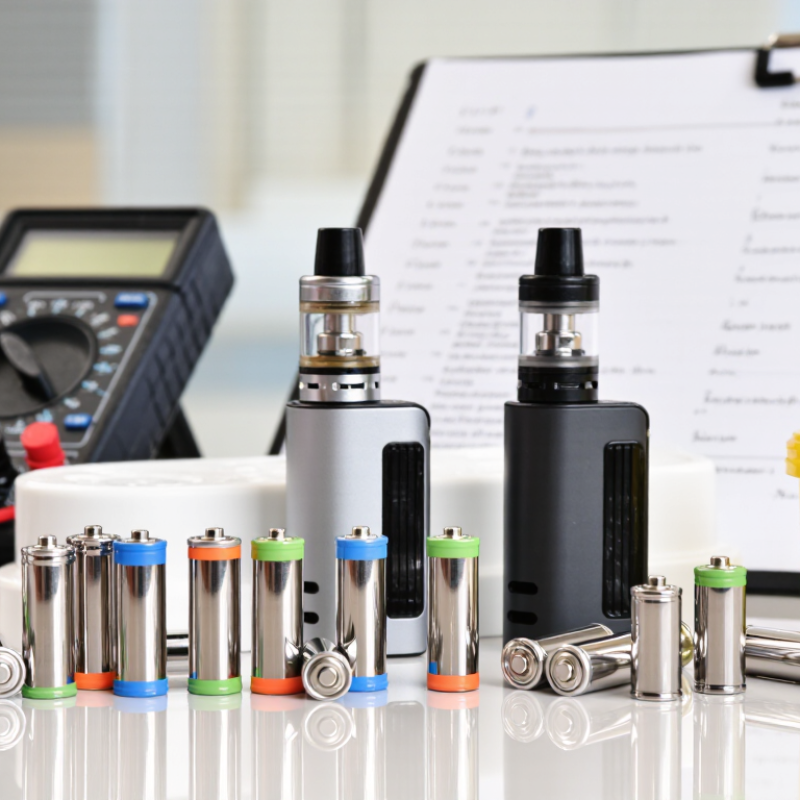
Defining Reliability in Vape Battery Sourcing
Reliability in vape battery sourcing means more than a high capacity label. It means stable performance, controlled production, and predictable behavior under normal use. A reliable supplier should provide batch records, safety test reports, and clear cell specifications. Documents should match the actual shipment. Small mismatches matter.
I would examine capacity tolerance, internal resistance, cycle performance, and protection controls. Ask how each batch is sampled and what happens after a failed test. A serious supplier can explain its process without hiding behind technical language. Relevant transport and safety documentation, including UN 38.3 and applicable IEC testing, should be verified for the target market. Requirements can differ between countries.
Physical details also reveal useful clues. Check insulation, terminal alignment, labeling, and packaging after transit. Loose separators or crushed cartons suggest weak handling controls. Supplier history matters, but recent evidence matters more. Request current inspection records, not only old certificates. A factory may have improved, or quietly changed materials. That possibility deserves attention.
Reliability is not perfection. Batteries can still show variation. The real question is whether variation is measured, disclosed, and controlled. I would keep reserve samples from every approved batch and compare them during incoming inspection. This adds time and cost. It also exposes problems before they reach customers. Good sourcing decisions leave an audit trail, even when the evidence feels inconvenient.
How to Choose Reliable Vape Batteries for Global Sourcing? - Defining Reliability in Vape Battery Sourcing
A practical, evidence-based sourcing checklist for rechargeable lithium-ion vape batteries
| Reliability Dimension | What to Verify | Suggested Sourcing Benchmark | Required Evidence | Risk if Unverified |
|---|---|---|---|---|
| Cell Chemistry and Format | Confirm the lithium-ion chemistry, cylindrical cell format, nominal voltage, maximum charging voltage, and discharge limits. | All electrical limits must match the intended vape device and protection design. | Current cell specification sheet, product drawing, batch label, and sample inspection report. | Overheating, reduced service life, device incompatibility, or unsafe charging. |
| Electrical Capacity | Measure delivered capacity under a defined test current, temperature, cutoff voltage, and charging method. | Use a written test protocol; compare results with the declared rated capacity and record batch variation. | Independent laboratory capacity report and incoming quality-control records. | Shorter runtime, misleading specifications, and inconsistent user experience. |
| Continuous Discharge Capability | Check the continuous discharge current rather than relying only on a marketing pulse-current figure. | The verified continuous current rating should meet or exceed the device’s maximum sustained demand with a safety margin. | Test method, discharge curves, temperature readings, and signed test results. | Excessive heat generation, voltage drop, venting, or premature failure. |
| Protection and Device Compatibility | Determine whether the battery is protected or unprotected and verify compatibility with the device’s protection circuit, charger, and battery compartment. | Do not mix protected and unprotected configurations without documented engineering approval. | Protection-circuit specifications, overcharge and over-discharge test results, and compatibility samples. | Short circuit, overcharge, deep discharge, mechanical damage, or thermal incidents. |
| Safety Testing | Review testing against applicable lithium-battery safety requirements, including IEC 62133-2 where relevant to the product category. | The report must identify the tested cell or battery model and match the production configuration. | Complete laboratory report, test scope, model identification, and report date. | Unidentified safety weaknesses and difficulty satisfying customer or regulatory requirements. |
| Transport Compliance | Confirm that the battery configuration has passed the applicable UN Manual of Tests and Criteria, Part III, Sub-section 38.3 requirements. | Obtain a valid UN 38.3 test summary before arranging international shipment. | UN 38.3 test summary, battery classification, packaging instructions, and transport documents. | Shipment delays, carrier rejection, customs issues, or unsafe transport handling. |
| Thermal Performance | Evaluate temperature rise during charging, continuous discharge, storage, and abnormal operating conditions. | Set a project-specific maximum temperature and stop criteria before approving mass production. | Thermal test data at minimum and maximum operating conditions, including charger and device combinations. | Accelerated aging, capacity loss, swelling, or thermal runaway risk. |
| Internal Resistance | Measure direct-current internal resistance using a consistent instrument, state of charge, and temperature. | Define a resistance range and reject abnormal values or excessive variation within the same batch. | Cell-level resistance records, sampling plan, instrument calibration, and trend reports. | Higher heat generation, unstable performance, and reduced usable capacity. |
| Cycle Life | Test capacity retention after repeated charge and discharge cycles using a documented protocol. | Specify the cycle count, current, temperature, cutoff voltage, and minimum retained capacity in the purchase agreement. | Cycle-life curves from an independent laboratory or controlled production validation test. | Premature capacity degradation and higher warranty or replacement costs. |
| Manufacturing Consistency | Review variation in capacity, voltage, resistance, dimensions, insulation, terminals, and labeling between production lots. | Approve a golden sample, define critical tolerances, and require lot-level inspection before shipment. | Incoming inspection reports, process-control records, lot traceability, and nonconformance history. | Unpredictable performance and inconsistent fit across finished products. |
| Traceability | Ensure every shipment can be traced to cell lot, production date, test records, and packaging unit. | Require unique lot identification on cells, cartons, and commercial documents. | Lot-code system, production records, certificates of analysis, and retention samples. | Slow recalls, difficult root-cause analysis, and weak quality accountability. |
| Packaging and Storage | Check terminal insulation, protection from short circuit, mechanical separation, state of charge, and storage conditions. | Use packaging suitable for lithium batteries and follow applicable air, sea, and ground transport requirements. | Packaging specification, loading photos, shipping instructions, and warehouse condition records. | Short circuits, physical damage, moisture exposure, and transport nonconformity. |
| Supplier Change Control | Identify how changes to materials, cell design, production site, equipment, or test methods are communicated. | Require written approval before any change affecting safety, performance, form, fit, or regulatory status. | Change-control procedure, revision history, approval workflow, and requalification plan. | Unapproved substitutions and unexpected differences between approved samples and production goods. |
| Quality Agreement | Define acceptance criteria, sampling levels, corrective-action deadlines, warranty terms, and responsibilities. | Include measurable specifications and a documented process for handling nonconforming batteries. | Signed quality agreement, purchase specification, inspection checklist, and corrective-action records. | Disputes, inconsistent inspections, delayed claims, and uncontrolled quality costs. |
| Independent Verification | Use an independent laboratory or qualified inspection service for pre-shipment and periodic validation. | Test production samples rather than relying solely on supplier-provided documents. | Third-party test report, sample-sealing record, chain of custody, and corrective-action follow-up. | Undetected specification fraud, counterfeit documentation, or batch-level defects. |
| Overall Reliability Decision | Combine document review, sample testing, factory controls, shipment compliance, and traceability into one approval decision. | Approve only when critical safety evidence is complete | Completed supplier scorecard, risk assessment, approved sample, and signed release authorization. | Purchasing decisions based on price or nominal capacity alone. |