
China Top Fine Line Reduction Suppliers?
Choosing China’s top Fine Line Reduction suppliers requires more than comparing product photos or attractive claims. A reliable evaluation should examine formulation quality, manufacturing controls, testing records, and customer support. Suppliers may offer creams, serums, masks, devices, or private-label development services. These categories need different standards.
Look for facilities with documented quality systems, trained technical teams, and clear ingredient traceability. Stability testing matters. So does microbiological control. Ask how suppliers verify texture, odor, packaging compatibility, and shelf life. For skincare products, request complete ingredient lists, safety documentation, batch records, and test reports from qualified laboratories. Claims should remain realistic and supported by evidence. “Visible improvement” needs defined testing conditions, not vague marketing language.
Factory visits can reveal useful details. Observe clean production rooms, labeled raw materials, calibrated equipment, and organized sample storage. Communication also matters. Strong suppliers explain minimum order quantities, lead times, formulation changes, and regulatory responsibilities without hiding limitations. Some companies are excellent at manufacturing but weaker at international documentation. Others provide polished presentations but limited technical evidence. The market is not perfectly transparent.
Buyer reviews can help, but they should not replace direct verification. Compare several suppliers using the same checklist. Check whether certificates are current and relevant. Confirm whether testing applies to the finished product, not only individual ingredients. A supplier may appear impressive at first. That impression can change after a small trial order. Careful sampling, written specifications, and independent review create a more dependable path toward selecting China’s top Fine Line Reduction suppliers.
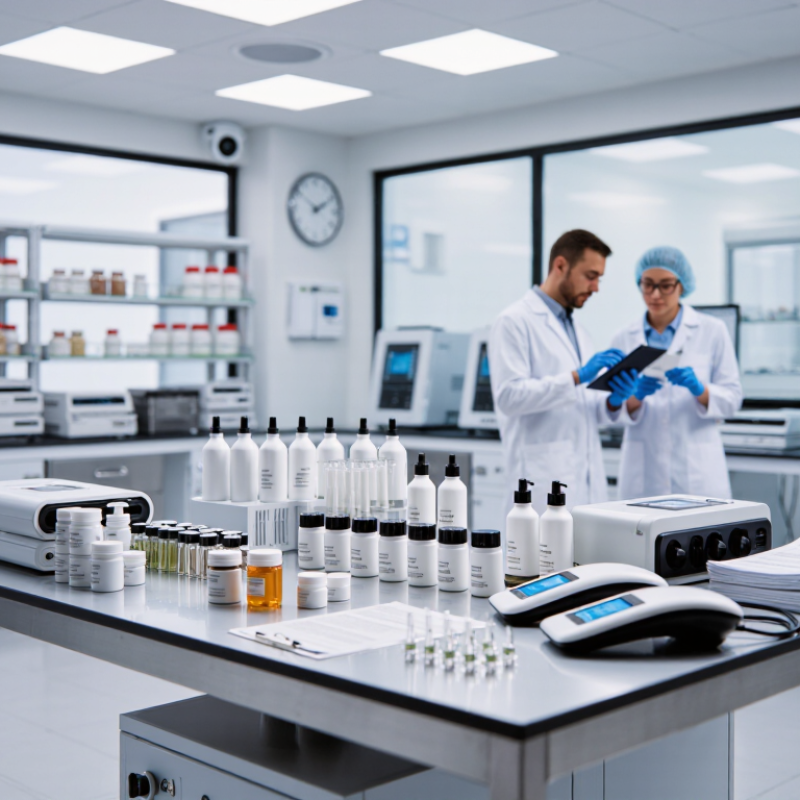
What Defines China Fine-Line Reduction Suppliers: OEM, ODM, and Ingredient Experts
China’s fine-line reduction suppliers are increasingly judged by more than factory scale. OEM partners manufacture a finished formula, while ODM teams develop textures, packaging, and claims from an initial brief. Ingredient experts add clinical knowledge, such as peptide selection, retinoid alternatives, and barrier-supporting compounds.
The global anti-aging market was valued at about USD 44.5 billion in 2022, according to Grand View Research. Its report also projects steady growth through 2030. This demand pushes Chinese suppliers to provide faster sampling and stronger evidence. Serious teams should show stability data, microbial testing, ingredient traceability, and human-use evaluations. Not every “visible result” claim is equally reliable.
OEM is practical for a defined formula.
ODM is better for product development.
Ingredient specialists need deeper proof.
A capable supplier may offer all three services, but the balance matters. Some factories excel at production yet lack clinical design experience. Others present impressive ingredient libraries but provide weak batch consistency. Buyers should inspect Certificates of Analysis, production records, testing methods, and sample-to-batch comparisons. ISO 22716-based manufacturing practices can support quality control, but certification alone does not guarantee performance. That point is easy to overlook.
Mintel’s beauty research repeatedly highlights consumer demand for transparent claims and credible efficacy. Therefore, suppliers should explain concentration ranges, testing periods, and realistic improvement limits. Fine lines do not disappear equally across every skin type. A careful OEM or ODM partner admits this uncertainty, records the learning, and adjusts the formula without hiding inconvenient results.
| Supplier Category | Primary Role | Fine-Line Product Formats | Typical Development Support | Ingredient Expertise | Quality and Compliance Evidence | Typical Minimum Order Pattern | Indicative Development Timeline | Best Fit for Buyers |
|---|---|---|---|---|---|---|---|---|
| OEM Manufacturer | Manufactures a buyer’s existing or fully specified formula under contract. | Serums Creams Eye Care Masks | Production, filling, packaging, batch documentation, and basic technical adjustments. | Usually strong in processing stability, filling compatibility, and scale-up of approved formulas. | GMP-based production controls, batch records, certificate of analysis, microbiological testing, and stability documentation where applicable. | Often lower than a fully customized launch because the formula and process are already defined; exact quantities depend on packaging and production setup. | Approximately 4–12 weeks after formula, packaging, and artwork approval. | Brands that already have a validated formula and need reliable contract manufacturing. |
| ODM Manufacturer | Develops a finished product from an existing platform formula or a customized concept. | Anti-Aging Creams Peptide Serums Gel Products Essences | Concept development, formula selection, customization, sensory adjustment, packaging coordination, and private-label support. | Commonly works with peptides, retinoid alternatives, niacinamide, hyaluronic acid, ceramides, antioxidants, and botanical extracts. | Formula specifications, ingredient lists, product safety files, compatibility testing, stability testing, and manufacturing quality records should be requested. | Usually requires a moderate initial order because formula customization, packaging, and component purchasing are included. | Approximately 8–20 weeks, depending on customization, testing, packaging, and regulatory requirements. | New or growing brands seeking faster product development without building an internal laboratory. |
| Ingredient Specialist | Supplies active ingredients, functional raw materials, or standardized botanical ingredients to manufacturers and brands. | Active Concentrates Peptides Humectants Botanicals | Technical data, recommended use levels, formulation guidance, compatibility information, and sample support. | Usually strongest in ingredient identity, assay data, delivery systems, molecular characteristics, and application research. | Certificate of analysis, specification sheet, safety data sheet, allergen information, heavy-metal testing, microbiological results, and origin documentation. | Typically more flexible for laboratory samples and pilot quantities; commercial volumes vary by ingredient and standard packaging. | Approximately 1–8 weeks for samples and technical evaluation; commercial supply depends on stock and production planning. | Formulators and brands that already have manufacturing capability but need differentiated active ingredients. |
| Integrated OEM/ODM Partner | Combines formulation, manufacturing, packaging coordination, and private-label services in one supply chain. | Serums Creams Patches Routine Sets | Market concept review, formula development, pilot batches, packaging sourcing, artwork coordination, and production management. | Can combine cosmetic actives with texture, preservation, delivery-system, and packaging expertise. | Factory audit records, quality-management procedures, product testing, packaging compatibility results, traceability, and export documentation should be verified. | Usually moderate to high, especially when several stock-keeping units or custom packages are launched together. | Approximately 10–24 weeks for a customized product range, depending on testing and packaging complexity. | Brands seeking one accountable partner for product development and commercial manufacturing. |
| Private-Label Stock Supplier | Provides ready-made products that can be sold with limited label or packaging changes. | Basic Serums Moisturizers Eye Creams | Catalog selection, label customization, standard packaging, and order fulfillment. | Generally based on established formulas with commonly used anti-aging and moisturizing ingredients. | Product specifications, ingredient lists, batch testing, manufacturing information, and required export documents should be confirmed before purchase. | Often the lowest entry requirement because products are pre-developed and packaging options are standardized. | Approximately 2–8 weeks after label and packaging approval, subject to inventory availability. | Small brands, test launches, seasonal campaigns, and buyers prioritizing speed over formula exclusivity. |
| Clinical-Oriented Formulation Partner | Develops products with a stronger focus on measurable performance, controlled testing, and technical substantiation. | Concentrated Serums Barrier Creams Targeted Treatments | Ingredient screening, prototype development, instrumental testing, user testing, claims support, and technical report preparation. | May specialize in peptides, retinoid systems, skin-barrier ingredients, antioxidants, exfoliating acids, and delivery technologies. | Stability testing, safety assessment, challenge testing where relevant, instrumental measurements, consumer-use studies, and documented claim-support methods. | Usually moderate to high because testing, formulation work, and technical documentation require additional resources. | Approximately 12–30 weeks, depending on the required testing program and claims strategy. | Brands that need stronger technical substantiation for premium positioning and regulated markets. |
| Export-Focused Contract Supplier | Manufactures products for international markets and supports documentation, logistics, and destination-market requirements. | Facial Care Professional Skincare Gift Sets | Export packaging, multilingual labels, document preparation, shipment coordination, and market-specific communication. | Experience varies; buyers should confirm whether active-ingredient selection is supported by in-house formulators or external partners. | Product information files, certificates of analysis, safety data, ingredient compliance review, traceability, and shipment documentation. | Usually moderate, with order quantities influenced by destination regulations, packaging requirements, and shipping schedules. | Approximately 6–18 weeks after product approval, with additional time for destination-market compliance checks. | Distributors and brands selling across multiple regions with established import and regulatory processes. |
| Specialized Packaging and Formula Partner | Combines cosmetic formulation with packaging designed to protect sensitive active ingredients. | Airless Products Opaque Serums Pump Bottles Single-Dose Packs | Formula-packaging compatibility testing, filling trials, dosage control, component sourcing, and packaging validation. | Useful for oxidation-sensitive, light-sensitive, water-based, or high-active formulas that require controlled dispensing. | Package compatibility data, leakage testing, closure testing, stability assessment, filling records, and component specifications. | Moderate to high because custom components and filling trials may require advance purchasing. | Approximately 10–22 weeks, depending on mold requirements, component availability, and testing scope. | Brands launching premium formulas where packaging performance is important to product stability and user experience. |
| Evaluation Criteria | Key factors for comparing China-based fine-line reduction suppliers without relying only on price. | Formula Ownership Testing Traceability | Assess formulation capability, communication quality, sample revision process, production capacity, and project management. | Verify ingredient identity, concentration, supplier documentation, recommended use level, stability behavior, and regulatory suitability. | Request current certificates, batch records, testing reports, facility information, quality procedures, and clear change-control policies. | Compare minimum order quantity, sample fees, tooling costs, packaging minimums, payment terms, and repeat-order conditions. | Build a timeline that includes sampling, revisions, testing, packaging approval, production, inspection, and shipping. | Suitable for any buyer creating a documented shortlist of OEM, ODM, and ingredient-focused suppliers. |