
China Best Vape Batteries for Global Buyers?

China Best Vape Batteries for Global Buyers? This question demands more than a low unit price. China remains a major electronics manufacturing hub, but battery quality can vary between factories, batches, and unverified listings. Global buyers should examine cell chemistry, capacity testing, safety documentation, packaging, and traceability before approving Vape Batteries for international distribution.

Industry data shows why this category deserves careful evaluation. Grand View Research estimated the global e-cigarette market at approximately USD 19 billion in 2023, with continued growth expected through the decade. The Global State of Tobacco Harm Reduction also reported more than 100 million adult vapers worldwide. These figures indicate strong demand, yet they do not prove that every battery supplier is reliable. Market size is not quality assurance.

Safety must remain central. Buyers should request UN 38.3 transport-test evidence, relevant IEC 62133-2 documentation, batch records, and independent capacity reports. Mooch, a widely cited independent battery-testing specialist, gives a practical warning: “Never use a battery with a damaged wrap.” That advice is simple. It is also easy to ignore during rushed procurement. A professional sourcing process should include factory audits, sample testing, protected terminals, clear labeling, and controlled shipping. Some supplier claims may look impressive but remain difficult to verify. That is an uncomfortable weakness in this market. Therefore, this guide compares China-based Vape Batteries through evidence, compliance, consistency, and real-world purchasing risks—not price alone.
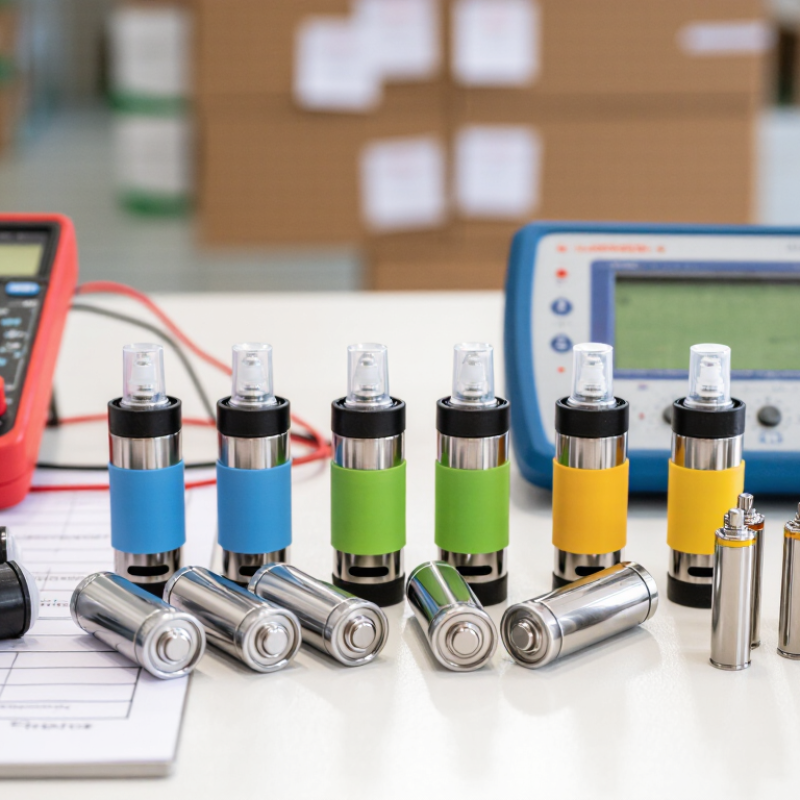
China Best Vape Batteries for Global Buyers?

What Makes a Vape Battery Suitable for Global Buyers?

A vape battery suitable for global buyers must be more than powerful. It should deliver stable output, predictable charging, and reliable protection under normal use. Experienced buyers inspect the cell chemistry, rated capacity, continuous discharge rating, and cycle performance. A large capacity label can mislead. Measured results matter more than impressive numbers. Good battery design also includes insulation, secure terminals, and protection against short circuits, overcharging, and excessive heat. Small details matter.

Global supply adds another layer. Buyers should request test reports, batch traceability, safety data, and clear technical labels. Reports should reference recognized safety standards and the tested configuration. Documentation should identify charging limits, storage conditions, temperature ranges, and disposal guidance. Independent laboratory testing can strengthen confidence, but one certificate does not prove every production batch is identical. That assumption deserves review. Packaging must protect terminals during shipping and follow the destination market’s transport rules. Requirements differ across regions, so local compliance checks remain essential.

Compatibility is equally practical. The battery must match the device’s voltage requirements, connector design, charging system, and physical dimensions. A mismatch can cause poor performance or dangerous overheating. Suppliers should provide samples for controlled testing before volume orders. Buyers can record charging temperature, output stability, and visible wear over repeated cycles. Results should be reviewed by qualified technical staff, not judged by appearance alone. Even careful evaluations have limits; real-world storage and user handling may vary. That uncertainty should remain visible in purchasing decisions.

Key Battery Types and Specifications from Chinese Suppliers

China’s battery suppliers commonly offer cylindrical lithium-ion cells in 18650 and 21700 formats. Some also provide customized pouch cells for legal electronic devices. The physical size matters because a cell must fit the device compartment without pressure or movement.

Capacity is measured in milliampere-hours, while voltage is usually listed around 3.6 or 3.7 volts nominal. Buyers should request continuous discharge current, not only an impressive pulse rating. That detail affects heat, runtime, and operating stability. Ask for cutoff voltage, cycle life, charging temperature, discharge temperature, and cell weight. Small differences can matter.

Safety documentation deserves careful checking. Reliable suppliers should provide batch numbers, production dates, test reports, safety data sheets, and transport documents such as UN 38.3 records. IEC 62133-2 testing may also support quality evaluation, depending on the destination market. Protected cells can add another safety layer, but protection circuits may change the available space and electrical behavior. Not every supplier explains this clearly.

I would compare samples before placing a large order. A label can promise 3,000 mAh, yet independent testing may show less capacity under real conditions. That is not always fraud; testing methods can differ. Still, the gap needs explanation. Reviewers should inspect insulation, terminal welding, voltage consistency, packaging, and traceability. A low price is tempting, but weak documentation creates expensive uncertainty.

How to Evaluate Quality, Safety, and Certification Standards

China Best Vape Batteries for Global Buyers?

For global buyers, battery quality begins with traceable manufacturing, not attractive specifications. Ask for the cell manufacturer, production date, batch number, and test records. A reliable supplier should provide clear capacity data, discharge limits, and internal resistance results. These details help buyers compare laboratory claims with practical performance. Certification matters too.

Request current reports for UN 38.3 transport testing and IEC 62133-2 safety evaluation. Depending on the destination, additional CE, UKCA, or local requirements may apply. A certificate should match the exact battery model and factory, not a similar product. Check the issuing laboratory and report validity. Documents can be incomplete.

Inspect physical samples carefully. Look for undamaged wraps, insulated terminals, readable labels, and consistent weight. A battery management system should support protection against overcharge, over-discharge, overheating, and short circuits. Packaging should prevent movement and contact between terminals. Small details matter.

Do not trust capacity alone. Higher numbers may hide weaker cycle life or unstable output. Ask for cycle-test conditions, temperature limits, and storage guidance. An independent sample test can reveal differences between advertised and actual performance. I have seen buyers focus on price first, then discover unclear labeling and expensive returns. That mistake is easy to repeat. Quality decisions need both technical evidence and cautious judgment.

Comparing China’s Vape Battery Manufacturing and Export Options

China Best Vape Batteries for Global Buyers?

Comparing China’s Vape Battery Manufacturing and Export Options

China offers extensive battery manufacturing capacity, but the best option depends on compliance, consistency, and application requirements. Buyers should compare cell chemistry, capacity tolerance, cycle performance, and protection design. Lithium-ion cells need suitable safeguards against overcharge, short circuits, and overheating.

Factory capability varies widely. A reliable supplier should provide current test reports, production records, safety data sheets, and UN38.3 transport documentation. IEC 62133 alignment may also matter in certain markets. Ask for samples from the same production line used for bulk orders. Small differences can affect device performance.

Do not trust polished paperwork alone. An on-site audit or independent inspection can verify cell markings, welding quality, insulation, and packaging. Export planning also requires careful attention to declared specifications, battery quantities, labeling, and carrier rules. Requirements can change by destination.

Start with a small trial order. Measure voltage stability and temperature during controlled testing. Then review defect rates, response times, and replacement procedures. Some suppliers offer low prices but limited traceability. That trade-off may become expensive later. A stronger process combines technical review, documented quality controls, and destination-specific compliance checks.

How to Select a Reliable Chinese Battery Supplier

China Best Vape Batteries for Global Buyers?

How to Select a Reliable Chinese Battery Supplier

Selecting a Chinese battery supplier requires more than comparing prices. Start by reviewing factory records, production experience, and quality-control procedures. Ask for recent test reports covering capacity, cycle life, heat resistance, and protection performance. The documents should identify the tested model clearly. Vague paperwork deserves caution.

Request samples from the same production line used for larger orders. Measure their capacity, voltage stability, dimensions, and connector consistency. Keep written results for comparison. A reliable supplier should explain material choices and production limits without making unrealistic promises. No supplier is perfect. That matters.

Check traceability before signing an agreement. Each batch should connect to manufacturing dates, inspection records, and shipment documents. Discuss packaging, storage conditions, transport rules, and destination-market requirements in writing. Clear communication is practical evidence of professionalism. Slow answers can create expensive delays later.

Visit the facility when possible, or arrange an independent audit. Observe clean work areas, controlled storage, trained inspectors, and documented corrective actions. Confirm warranty terms, replacement procedures, and response times. A lower quote may hide weaker testing or inconsistent materials. I would rather pay slightly more for stable quality than repeat a failed shipment. Suppliers should also support lawful product use and comply with all applicable safety requirements.

China Best Vape Batteries for Global Buyers? - How to Select a Reliable Chinese Battery Supplier
Evaluation Dimension Recommended Technical Benchmark Why It Matters for Global Buyers Supplier Evidence to Request Warning Signs
Battery Chemistry Rechargeable lithium-ion cells using a documented chemistry such as NMC or INR for compact, high-power applications. Chemistry affects energy density, power capability, heat generation, service life, and safety performance. Cell datasheet, safety data sheet, chemistry declaration, and traceable production-batch information. Unclear chemistry, reused cells, mixed cell grades, or specifications that change between documents.
Nominal Voltage Approximately 3.6–3.7 V for a single standard lithium-ion cell; full-charge voltage is commonly 4.2 V. Correct voltage matching is essential for charger compatibility, device performance, and battery-management-system design. Official electrical specification showing nominal voltage, charge voltage, discharge cut-off voltage, and test conditions. Marketing materials that confuse nominal voltage with maximum or open-circuit voltage.
Capacity Rating Capacity stated in mAh or Ah with a defined discharge current, temperature, cut-off voltage, and test method. Capacity claims cannot be compared fairly without consistent test conditions. Capacity test report, sample measurements from multiple lots, and the exact IEC or equivalent test method used. Unusually high capacity claims without test conditions, tolerance ranges, or independent verification.
Continuous Discharge Rating Use the verified continuous-current rating rather than a short-duration pulse figure when selecting a cell. Continuous current is more relevant to sustained device operation and helps reduce overheating and premature degradation. Discharge curves, thermal test data, current limits, and a clear distinction between continuous and pulse ratings. Pulse current presented as the normal operating rating or no thermal limits provided.
Cycle Life Typically evaluated at a specified depth of discharge, temperature, charge rate, and end-of-life capacity threshold; many quality lithium-ion cells are tested to several hundred cycles. Cycle life depends strongly on operating conditions, so a single unsupported number is not meaningful. Cycle-life graphs showing capacity retention, test conditions, charging protocol, and end-of-life definition. “Long life” claims with no cycle count, retention percentage, or test protocol.
Protection and BMS Protection design should address overcharge, over-discharge, overcurrent, short circuit, and abnormal temperature conditions where applicable. Protection electronics and device-level controls reduce foreseeable misuse risks but do not make a damaged cell safe. Protection-circuit specification, cutoff thresholds, response-time data, schematic, and validation test results. No protection strategy, bypassed safety controls, or a claim that protection is unnecessary for every application.
Cell Matching For multi-cell packs, cells should be matched by capacity, internal resistance, voltage, production lot, and aging condition. Balanced cells improve pack consistency and help prevent individual cells from being overcharged or over-discharged. Matching criteria, incoming inspection records, balancing procedure, and pack-level quality-control reports. Random cell assembly, no lot control, or no evidence of balancing and matching.
Quality Certifications Certification should match the product, market, and transport route; commonly relevant evidence includes UN 38.3 testing and IEC 62133-2 safety testing for applicable rechargeable cells or batteries. Correct documentation supports customs clearance, transport compliance, product approval, and customer due diligence. Current test reports issued for the same cell or battery model, certificate scope, laboratory details, and report validity. Generic certificates, expired documents, mismatched model numbers, or unverifiable laboratory reports.
Transport Compliance Shipment planning should follow applicable air, sea, and destination-country dangerous-goods rules, including lithium-battery packaging and declaration requirements. Non-compliant shipments may be delayed, rejected, fined, or exposed to additional safety controls. UN 38.3 test summary, safety data sheet, packaging instructions, shipping classification, and dangerous-goods contact process. Requests to misdeclare batteries, conceal contents, or use unsuitable packaging.
Incoming Quality Control Verify dimensions, weight, voltage, capacity, internal resistance, appearance, insulation, polarity, and batch consistency. Pre-shipment and incoming checks can identify counterfeit, damaged, or out-of-specification cells before assembly or resale. Inspection checklist, calibrated equipment records, sampling plan, acceptance criteria, and retained sample policy. Only visual inspection, no measurement records, or refusal to provide batch-level quality data.
Traceability Every cell or pack should be traceable to a production lot, manufacturing date, materials record, and inspection result. Traceability simplifies recalls, warranty analysis, root-cause investigations, and regulatory responses. Lot-code format, production records, barcode system, retention period, and recall procedure. Unmarked cells, altered labels, inconsistent date codes, or inability to identify the manufacturing lot.
Sample Validation Conduct independent testing on production samples before approving a large order. Samples help verify whether actual production performance matches the supplier’s datasheet and quotation. Sample test plan covering capacity, discharge performance, charging behavior, dimensions, resistance, and abnormal-condition checks. Pressure to place a large order before samples are tested or refusal to support third-party inspection.
Manufacturing Capability Supplier should demonstrate controlled assembly, clean handling, calibrated equipment, trained operators, and documented process controls. Consistent processes reduce variation between samples, pilot orders, and mass production. Factory audit, process flow, equipment calibration records, quality-management procedures, and production capacity by month. Trading-only arrangements presented as direct manufacturing, unclear production location, or unsupported capacity claims.
Warranty and Defect Handling Use written warranty terms with defect definitions, response times, evidence requirements, replacement rules, and recall responsibilities. A clear after-sales process limits disruption when a batch fails or transport damage occurs. Signed warranty policy, corrective-action process, failure-analysis procedure, and escalation contacts. Verbal promises only, broad exclusions, or refusal to define responsibility for safety-related defects.
Commercial Fit Compare total landed cost, minimum order quantity, lead time, tooling charges, packaging, inspection, freight, duties, and compliance costs. The lowest unit price may create higher total costs through testing, delays, failures, or regulatory problems. Detailed quotation, Incoterms, production timeline, payment milestones, packaging specification, and change-control terms. Hidden fees, unexplained price reductions, inconsistent lead times, or pressure for full payment before verification.

Leading and shaping the future of endodontics globally is our life’s work.