China Best Dietary Supplement OEM Manufacturers

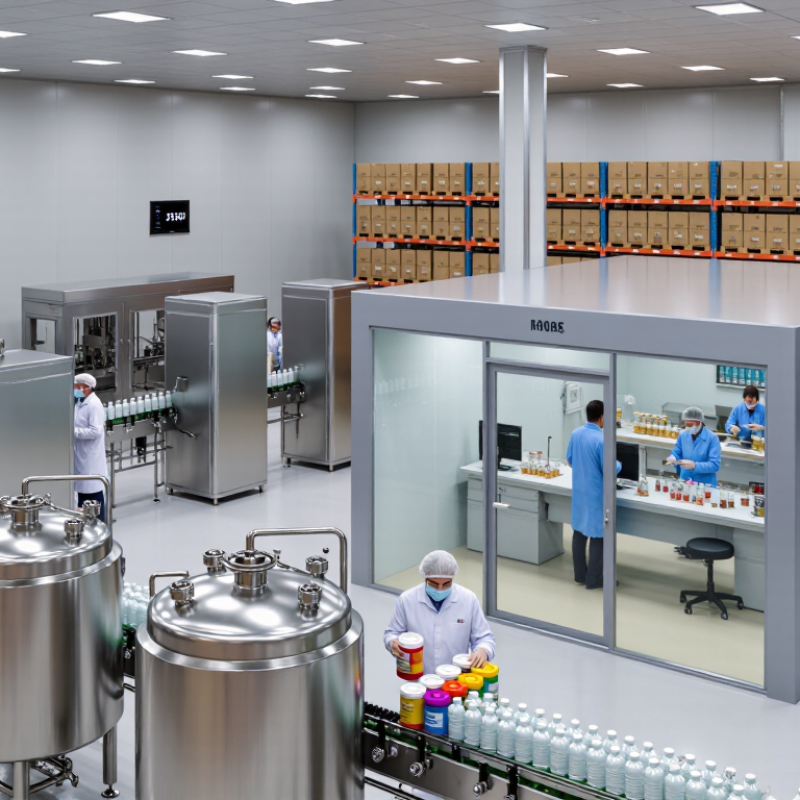
Choosing among China’s best Dietary Supplement OEM manufacturers requires more than comparing factory prices. A reliable partner must connect formulation science, ingredient verification, production discipline, and transparent communication. In a modern facility, this may include stainless-steel blending tanks, controlled humidity rooms, barcode-based batch tracking, and documented laboratory testing. These details matter because a polished product can still fail when supplier records are incomplete or specifications are unclear.

Mark Blumenthal, founder and executive director of the American Botanical Council, has repeatedly stressed the importance of quality in herbal products: “Quality is the foundation of consumer trust.” His view reflects a practical truth in Dietary Supplement OEM work. Manufacturers should verify botanical identity, test contaminants, confirm potency, and retain traceable samples from each batch. Certificates alone are not enough. They need careful review.

Experience also teaches humility. A factory may hold respected certifications, yet its communication can remain slow or inconsistent. A technically strong formula may also need better taste, texture, or packaging protection. These weaknesses deserve attention, not concealment. Buyers should examine audit reports, stability data, production capacity, and recall procedures before signing a contract. They should ask who approves raw materials and how deviations are handled.

This guide examines China’s leading Dietary Supplement OEM manufacturers through those practical standards. It considers product development, quality systems, manufacturing flexibility, export experience, and evidence-based support. No ranking is perfect. Market conditions change. However, careful comparison can help brands choose a partner that protects product quality, consumer confidence, and long-term growth.

China Best Dietary Supplement OEM Manufacturers

What Dietary Supplement OEM Manufacturing Means in China

China Best Dietary Supplement OEM Manufacturers

What Dietary Supplement OEM Manufacturing Means in China

Dietary supplement OEM manufacturing in China is more than placing a logo on a bottle. A capable manufacturer may support ingredient sourcing, formula development, pilot batches, production, packaging, and quality documentation. Grand View Research reported that the global dietary supplements market reached about USD 177.5 billion in 2023. This growth increases demand for flexible, traceable manufacturing partners.

The process usually begins with a product brief. Technical teams then review dosage, ingredient compatibility, shelf life, and target-market requirements. A serious facility should provide batch records, certificates of analysis, microbial testing, heavy-metal testing, and stability data. ISO 22000 and current good manufacturing practices can strengthen the quality system, but certificates alone are not enough. Audits still matter.

Details reveal the difference.

During an assessment, buyers should inspect material labels, quarantine areas, weighing rooms, and retention samples. They should also ask how deviations are investigated and corrected. The International Organization for Standardization identifies traceability as a key control in food supply chains. That principle applies here. One weak link can affect an entire batch.

OEM sourcing is not risk-free. A polished presentation may hide inconsistent documentation or slow communication. I would request a small trial order before signing a large contract. Product claims, ingredients, labeling, and export documents must match destination-market rules. A low quotation can look attractive, yet testing and rework may later cost more. Performance should be judged through evidence, not promises.

Key Criteria for Choosing a Chinese Dietary Supplement OEM Manufacturer

China Best Dietary Supplement OEM Manufacturers

Choosing a Chinese dietary supplement OEM manufacturer requires more than comparing quotations. A low price may hide limited testing, unstable sourcing, or delayed production. Request valid GMP, HACCP, or ISO certifications that match your target market. Verify them with the issuing organizations. Ask for recent batch records, raw material specifications, and certificates of analysis. The documents should identify test methods, limits, and responsible laboratories.

Visit the facility when possible, or arrange an independent audit. Observe weighing rooms, production lines, warehouse temperatures, and cleaning records. Ask how the manufacturer controls allergens, contamination risks, and supplier changes. Ingredient traceability should reach the original supplier and production batch. It should not stop at a warehouse label. Small details matter. Check sample seals, expiry-date printing, and packaging accuracy.

Technical capability also deserves careful review. The team should explain dosage form, stability testing, flavor adjustment, and realistic shelf-life data. Request pilot batches before signing large-volume orders. Compare the pilot with the final production standard. Communication is another practical test. A dependable team answers clearly when specifications change. A polished presentation proves little. No checklist is perfect. One overlooked issue may be the factory’s change-control process. Ask who approves formula changes, how they are recorded, and when customers are notified. Confirm minimum order quantities, lead times, inspection rights, and support for the destination country’s labeling requirements.

Key Criteria for Choosing a Chinese Dietary Supplement OEM Manufacturer

This practical evaluation model assigns a total of 100 points to the main areas buyers should review when selecting a Chinese dietary supplement OEM manufacturer. Regulatory compliance and quality assurance receive the highest weight because they directly affect product safety, market access, traceability, and consistency.

Core Services Offered by China’s Dietary Supplement OEM Companies

Core Services Offered by China’s Dietary Supplement OEM Companies

China’s dietary supplement OEM manufacturers commonly support product development, ingredient sourcing, production, testing, and packaging. The global dietary supplements market was valued at about USD 177.5 billion in 2023, according to Grand View Research. That scale raises expectations for consistent quality, not just fast production. Formulation teams may adjust a powder’s flavor, solubility, or serving size through bench samples and pilot batches. Small details matter. A formula that works in a lab may taste chalky in a glass of water.

Ingredient Qualification

Ingredient qualification is another core service. Manufacturers can review supplier documents, verify specifications, and test incoming materials for identity and purity. Under U.S. FDA dietary supplement current good manufacturing practice rules, manufacturers must establish specifications and quality-control procedures for their products. Those requirements offer a useful reference when buyers assess manufacturing systems, though export requirements vary by destination. Ask for batch records and relevant test results, not only a quality certificate. Certificates alone can leave gaps.

OEM providers may also handle filling, labeling, and shipment-ready packaging, while helping clients prepare product documentation for market review. Capabilities differ between factories, and “one-stop service” does not guarantee equal depth in every area.

A sensible evaluation includes a facility audit, sample testing, and clear agreement on who approves formula changes. Even then, a first production run can reveal issues that samples miss. That is worth admitting.

Manufacturing Standards, Quality Control, and Regulatory Compliance

China’s best dietary supplement OEM manufacturers treat compliance as a daily production discipline. The 2023 CRN Consumer Survey reported that 74% of U.S. adults use dietary supplements. That usage rate raises expectations for safety, traceability, and accurate labeling.

A reliable facility follows current Good Manufacturing Practices, including documented batch records, supplier qualification, and controlled environmental conditions. Each raw material should arrive with identity testing and a certificate of analysis. Independent testing can verify potency, microbial limits, heavy metals, and contaminants. Operators should record temperature, humidity, cleaning, and line clearance. Small details matter.

Regulatory readiness must continue beyond production. Export-oriented manufacturers should review destination-market rules before approving formulas or claims. Records should support every ingredient, process step, and release decision. The FDA’s dietary supplement CGMP framework requires specifications for identity, purity, strength, composition, and contamination limits. Third-party audits can reveal weak points, although audits are not perfect. A rushed corrective action may look complete on paper but fail during a real recall exercise. Manufacturers should test traceability by linking one finished bottle to its supplier, operator, equipment, and laboratory results. That practical test often exposes missing records.

China Best Dietary Supplement OEM Manufacturers - Manufacturing Standards, Quality Control, and Regulatory Compliance

Evaluation Dimension Manufacturing Requirement Quality-Control Indicators Typical Objective Evidence Relevant Regulatory or Standard Reference Market Applicability
Food Safety Management A documented food-safety management system covering hazards, preventive controls, sanitation, traceability, and corrective actions. Hazard analysis completed; critical control points or preventive controls defined; deviations investigated and closed. Food-safety plan, hazard-analysis records, sanitation logs, internal-audit reports, and corrective-action records. HACCP principles; ISO 22000:2018 where certified. China and export markets; certification is generally voluntary unless specifically required by a customer or authority.
Good Manufacturing Practice Controlled facilities, hygienic personnel practices, validated cleaning, equipment maintenance, and documented production procedures. Environmental hygiene, line clearance, batch records, equipment calibration, and controlled processing conditions. Site procedures, training records, cleaning verification, calibration certificates, and batch-manufacturing records. Applicable Chinese food-production requirements; destination-market GMP requirements where relevant. All markets; exact requirements depend on product category and destination.
Quality Management System Defined responsibilities for document control, supplier approval, nonconforming products, complaints, recalls, and continual improvement. Controlled specifications; change-control approval; complaint trends reviewed; corrective and preventive actions tracked. Quality manual, standard operating procedures, change-control forms, complaint logs, and CAPA reports. ISO 9001:2015 where certified. Applicable to both domestic and export supply chains; certification does not replace legal compliance.
Raw-Material Qualification Ingredients approved against identity, purity, safety, origin, storage, and supplier-performance requirements. Supplier risk classification; incoming identity testing; contaminant and adulteration screening based on risk. Approved-supplier list, specifications, certificates of analysis, sampling records, and quarantine/release records. Applicable food-safety standards and destination-market ingredient rules. All markets; ingredient legality must be assessed separately for each destination.
Identity and Potency Testing Finished products tested against approved specifications for declared active ingredients and critical quality attributes. Assay results within specification; validated or verified analytical methods; representative sampling plan. Finished-product certificate of analysis, laboratory worksheets, method references, and retained samples. Applicable national food standards and recognized analytical methods. All markets; claim substantiation and testing expectations vary by jurisdiction.
Microbiological Control Controls for microbial contamination in raw materials, production areas, water, packaging, and finished products. Testing against applicable limits for total microbial counts, pathogens, yeast, and mold where required. Microbiology reports, environmental-monitoring records, water-testing results, and sanitation verification. Applicable Chinese food-safety standards and destination-market microbiological criteria. All markets; limits depend on product form and legal classification.
Contaminant and Adulterant Testing Risk-based testing for heavy metals, pesticides, mycotoxins, residual solvents, undeclared pharmaceuticals, and other relevant contaminants. Analytes selected according to ingredient origin, product type, known risks, and destination-market requirements. Third-party laboratory reports, risk assessments, supplier declarations, and investigation records. Applicable limits under Chinese food-safety standards and destination-market legislation. All markets; testing frequency should be risk-based rather than assumed to be identical for every product.
Process Validation and Uniformity Critical processes such as blending, filling, tableting, encapsulation, drying, and heat treatment are defined and controlled. Blend uniformity, fill-weight variation, tablet weight, moisture, disintegration, or other product-specific attributes monitored. Validation protocols, process qualification reports, in-process test records, and trend analyses. Applicable GMP and food-production requirements for the product category. All markets; exact tests depend on dosage form and formulation.
Packaging and Label Control Packaging materials must be suitable for food contact and protect the product throughout its stated shelf life. Artwork approval; label reconciliation; seal integrity; lot number, expiry date, storage conditions, and net-content checks. Packaging specifications, artwork approvals, line-clearance records, packaging inspection reports, and reconciliation records. China: GB 7718, GB 28050, and applicable product-specific standards. China and export markets; labeling must be reviewed separately for each country or region.
Shelf-Life and Stability Shelf life established using product-specific stability data under defined storage conditions. Active-ingredient retention, moisture, appearance, microbial quality, packaging integrity, and other critical attributes monitored over time. Stability protocol, time-point results, storage-condition records, and expiry-date justification. Applicable food-safety and product-quality requirements in the target market. All markets; accelerated studies may support development but should not automatically replace real-time data.
Traceability and Recall Readiness Each batch traceable from incoming materials through production, packaging, release, distribution, and customer records. Mock recall completed within a defined response time; reconciliation of quantities manufactured, released, held, and distributed. Batch genealogy, distribution records, recall procedure, mock-recall report, and retention-sample log. Food-safety management and applicable food-recall requirements. All markets.
China Regulatory Classification Product classification established before formulation, claims, packaging, and production planning. Formula, permitted ingredients, dosage, claims, registration or filing pathway, and labeling aligned with the classification. Regulatory assessment, formula review, filing or registration documentation where applicable, and approved label materials. China Food Safety Law; applicable health-food registration or filing rules; GB 16740 where applicable. Products placed on the Chinese market.
United States Export Readiness Manufacturing and records support the requirements applicable to dietary supplements marketed in the United States. Specifications, master manufacturing records, batch records, quality-control review, complaint handling, and release procedures maintained. Applicable facility and product records, finished-product specifications, certificates of analysis, and recall documentation. U.S. FDA 21 CFR Part 111; applicable provisions of the Federal Food, Drug, and Cosmetic Act. United States; importer and product-specific obligations must also be assessed.
European Union Export Readiness Formula, ingredients, claims, labeling, and food-safety controls reviewed against the requirements of the intended EU member state and product category. Ingredient status, maximum levels where applicable, claim substantiation, allergen control, and traceability verified. Ingredient compliance review, technical documentation, label assessment, and traceability records. Directive 2002/46/EC and applicable EU food-information, health-claims, novel-food, and food-safety legislation. European Union; national implementation and member-state requirements may differ.
Audit and Supplier Transparency Manufacturers provide controlled access to relevant quality documentation and support customer, certification, or regulatory audits. Audit findings categorized by risk; corrective actions assigned, documented, and verified for effectiveness. Audit reports, certifications with scope and validity, corrective-action responses, and document-request records. Customer quality agreements; applicable certification-scheme rules; national regulatory requirements. All markets.

Note: Regulatory obligations depend on the product formulation, dosage form, claims, intended use, and destination market. Certifications and test reports should be verified for scope, issuing body, validity period, and product applicability.

How to Evaluate and Partner with the Right OEM Manufacturer

How to Evaluate and Partner with the Right OEM Manufacturer

China’s dietary supplement market offers strong manufacturing capacity, but selection requires evidence beyond factory photographs. Grand View Research valued the global dietary supplements market at approximately $177.5 billion in 2023. This growth increases pressure on suppliers, quality teams, and regulatory reviewers.

Request current certifications, audit reports, product specifications, and batch records before discussing large orders. Verify whether the facility controls raw material testing, allergen management, microbial analysis, and stability studies internally. A certificate of analysis should match the actual batch, not a generic template. Ask for sample retention procedures and traceability from ingredient delivery to finished goods. Small details matter.

Request a pilot batch.

A qualified OEM partner should explain minimum order quantities, lead times, testing fees, packaging limits, and change-control procedures in writing. Compare three samples using identical testing methods, not taste alone. The International Food Information Council’s 2023 Food and Health Survey reported that 64% of Americans used dietary supplements in the past year, showing how widely these products are consumed. Consumer trust therefore depends on consistent dosage, clear labeling, and dependable documentation.

Do not rely only on a successful factory visit. A polished production floor can still hide weak communication or unstable sourcing. I would schedule a remote quality review after the first shipment, then repeat supplier audits periodically. The process may feel slower, but rushed qualification creates expensive surprises. A practical partnership needs transparent corrective actions, realistic capacity commitments, and a shared willingness to question imperfect results.

Leading and shaping the future of endodontics globally is our life’s work.