How to Find the Best Auditorium Chairs for Sale in 2026
Finding the best auditorium chairs for sale in 2026 requires more than comparing prices and upholstery colors. A reliable choice must support comfort, safety, visibility, maintenance, and long-term value. Visitors may sit for three hours, shift repeatedly, or enter with mobility limitations. Small details matter. Seat pitch, lumbar support, aisle width, armrest shape, and return mechanisms can affect the entire experience.
Dr. Alan Hedge, a respected ergonomics researcher, expressed a useful principle: “Design should fit the user, not force the user to fit the design.” This idea should guide every auditorium seating decision. Buyers should request product samples, inspect welded joints, test the seat-return action, and examine fabric performance under frequent use. Fire ratings and accessibility requirements also need careful verification with qualified professionals. Product claims should never be accepted without current documentation.
The right auditorium chairs for sale should match the venue’s purpose. A cinema needs durable, easy-clean seating. A university hall may require writing tablets and flexible layouts. A performing arts venue may prioritize acoustic control and refined finishes. Budget remains important, but the cheapest chair can become expensive after repeated repairs.
There is no perfect option.
Even experienced buyers can overlook installation tolerances or replacement-part availability. That is why this guide compares materials, dimensions, comfort, warranties, supplier credibility, and lifecycle costs. It also questions attractive features that may not improve real audience comfort. By 2026, the best purchase will not simply look modern. It will perform quietly, resist daily wear, and serve diverse audiences for many years.
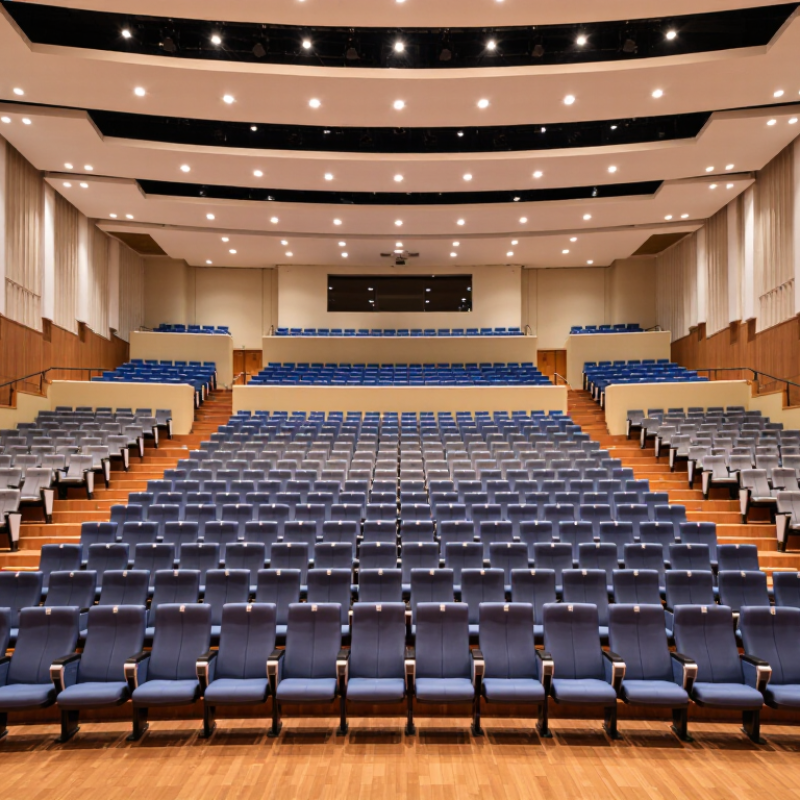
Define Auditorium Chair Requirements for Your Venue
Before searching for auditorium chairs for sale in 2026, define how your venue will actually operate. A school hall, conference center, and performing arts venue need different seating requirements. Record the room length, row count, aisle positions, platform height, and usable floor area. Measure twice. Small errors can reduce legroom across an entire row.
For regular events, consider seat width, back support, writing tablets, cup holders, and upholstery durability. A chair used six nights weekly needs stronger frames and simpler maintenance than one used monthly. Check the chair’s overall dimensions, not only the seat width. Include aisle clearance, wheelchair spaces, companion seats, and accessible routes in the layout. Local building and fire requirements should guide every decision. Ask suppliers for test reports, installation details, cleaning instructions, and warranty terms. Reliable documentation is more useful than attractive product photographs.
Acoustics also deserve attention. Hard surfaces may create unwanted scraping sounds when seats fold or move. Test a sample chair inside the room, preferably during a quiet rehearsal. Our first venue estimate ignored cleaning time beneath the seats, and staff later found dust collecting around fixed supports. That mistake changed the specification. Choose replaceable components where practical, but do not assume every part will be easy to source. Review delivery access, floor conditions, installation skills, and future repair budgets before approving a final seating plan. Details matter.
Compare Chair Types, Materials, and Seating Features
Choosing auditorium chairs in 2026 starts with the room, not the catalog. Fixed chairs suit theaters, lecture halls, and venues with permanent rows. Retractable seating saves space in multipurpose rooms. Loose chairs offer flexibility, but they can drift out of alignment during busy events. Measure row spacing, aisle width, platform sightlines, and wheelchair positions before comparing prices. A beautiful chair becomes a poor choice when knees touch the next row.
Materials affect comfort, maintenance, and service life. Fabric absorbs sound and feels warm under air conditioning, but it needs stain-resistant treatment and regular cleaning. Vinyl handles spills better and supports fast turnover, although it may feel less breathable. Molded plastic is practical for lightweight or temporary seating. It can also look too basic in a formal hall. For heavy daily use, inspect the frame, fasteners, foam density, and fire-performance documentation. Ask for test records, not promises.
Seating features deserve hands-on testing. Look for adequate lumbar support, smooth tip-up movement, quiet hinges, and armrests that do not narrow the seat. Tablet arms help classrooms, while cup holders may create cleaning problems in family venues. I still see buyers focus on cushion thickness alone. That is a mistake. Seat width, back angle, and row pitch often influence comfort more. Test several seats for at least twenty minutes. Short showroom trials can hide pressure points. Even experienced planners sometimes overestimate how much maintenance staff can manage. Factor in replacement parts, cleaning access, and installation tolerances before approving the final layout.
Evaluate Comfort, Accessibility, Safety, and Durability
When comparing auditorium chairs for sale in 2026, inspect comfort beyond showroom appearance. Sit for at least twenty minutes, if possible. Check whether the seat supports your hips without pressing behind the knees. A slightly flexible backrest can reduce stiffness during long lectures or performances. Look for smooth reclining movement and quiet returning mechanisms. Small noises become distracting in a silent hall. Measure the aisle width after installation, not only before it. Foldable writing tablets should open easily for users with limited hand strength. This detail is often missed.
Accessibility requires more than reserving wheelchair spaces. Confirm clear routes, companion seating, reachable armrests, and suitable seat heights. Ask the supplier for material specifications, load testing, fire-performance documents, and maintenance instructions. These records show professional control, but they do not replace an on-site inspection. Safety checks should include stable floor anchors, rounded edges, secure hinges, and controlled seat closure. I once trusted a heavy-looking chair to remain stable. That assumption was wrong. Weight alone proves little.
Durability depends on daily use, cleaning routines, and repair access. Choose upholstery that tolerates frequent wiping without becoming cracked or slippery. Examine stitching, fasteners, and the underside of each seat. Request samples and test them with repeated folding, spills, and ordinary cleaning products. A five-year warranty sounds reassuring, yet exclusions may matter more than the headline. Ask who replaces damaged parts and how quickly they arrive. Plan for imperfect use. Audiences drop bags, children pull mechanisms, and staff sometimes rush inspections.
Review Suppliers, Prices, Warranties, and Installation Services
Finding the best auditorium chairs for sale in 2026 requires more than comparing catalog prices. Grand View Research’s 2024 auditorium seating analysis estimates the global market at roughly USD 1.6 billion in 2023, with continued annual growth. That growth creates more supplier choices, but quality varies. Request test certificates, material samples, seat-width drawings, and references from venues with similar capacity. A reliable supplier should explain foam density, fabric abrasion results, flame performance, and replacement-part availability.
Budget in layers. Standard fixed chairs often cost about USD 250–600 each, while wider seats, writing tablets, acoustic panels, and reinforced mechanisms can exceed USD 1,000. These are working estimates, not quotations. The AIA Consensus Construction Forecast continues to identify labor and material volatility as major project risks, so obtain a fixed installation allowance. Installation may add 10–20% of the chair order, especially on sloped floors. Ask whether that fee covers anchors, row numbering, aisle alignment, packaging removal, and final inspection.
Warranties deserve sharper questions. Five years on the frame does not equal five years on upholstery, springs, or moving parts. Get every exclusion in writing. EN 12727 seating tests use repeated-load durability procedures, but passing a test does not guarantee comfortable daily use. Visit a completed hall. Sit through two hours. Count squeaks. I would also leave a small contingency budget; our first estimates often ignore damaged flooring, late drawings, or replacement fabric. Cheap today can become expensive during opening week.
Select and Purchase the Best Auditorium Chairs in 2026
Selecting the best auditorium chairs in 2026 starts with the room, not the catalogue. Measure row depth, aisle width, sightlines, platform access, and exit routes before requesting prices. In real projects, a chair may fit the drawing but restrict knees or cleaning access. PwC’s Global Entertainment & Media Outlook 2024–2028 values worldwide entertainment revenue at about 2.8 trillion dollars in 2023, with continued growth expected. More active venues will need seating that survives frequent use. Consider that carefully.
Specify commercial-grade frames, replaceable upholstery, controlled folding, and quiet return mechanisms. Ask suppliers for durability evidence aligned with EN 12727 testing, and review acoustic information against ISO 354 methods. A mock-up row reveals more than a brochure. Sit for 30 minutes. Watch the hinge. Listen to the return. Small noises become irritating during lectures and performances. I once underestimated cleaning time; dark fabric hid dust but showed oily fingerprints under bright lighting.
Purchase decisions should compare total cost, not only unit price. Record chair price, freight, installation, spare parts, warranty length, and expected maintenance. Request written test reports and a clear replacement-parts schedule. Check local accessibility, fire-safety, and egress requirements with qualified professionals. Order a small sample batch before the full installation. It may expose uneven spacing, weak cup holders, or uncomfortable lumbar angles. Those flaws are cheaper to correct before hundreds of seats arrive.
How to Find the Best Auditorium Chairs for Sale in 2026
Use these accessibility and space-planning dimensions when comparing auditorium chairs. Verify the final chair width, row spacing, aisle layout, and wheelchair locations against local building regulations and the project’s seating plan.
Reference dimensions are based on the U.S. ADA Standards for Accessible Design: accessible routes require at least 36 inches of clear width, wheelchair clear floor space is at least 30 × 48 inches, and a 60-inch diameter is commonly used for a wheelchair turning space.
