
Global buyers are re-evaluating Bovine Hydrolysed Collagen as demand shifts toward traceable, functional protein ingredients. The opportunity is substantial. Grand View Research valued the global collagen market at approximately USD 10.15 billion in 2023, forecasting strong growth through 2030. MarketsandMarkets projects a different market size and growth rate, reflecting varied definitions and research methods. That difference matters.
For procurement teams, “best” does not mean the lowest price. It means consistent peptide quality, documented bovine origin, controlled molecular weight, and reliable solubility. A clear certificate of analysis should show hydroxyproline content, moisture, microbiological limits, heavy-metal testing, and batch identification. Small details become expensive problems later. A cloudy drink, weak documentation, or unstable supply can damage a finished product’s reputation.
Dr. Keith Baar, a recognized collagen and connective-tissue researcher, has emphasized that collagen benefits depend on both nutrient availability and mechanical loading: “Collagen synthesis is a response to loading, not simply supplementation.” This practical view should guide responsible product claims. Collagen is not a miracle ingredient. It is one part of a broader nutrition and activity strategy.
This 2026 guide compares bovine hydrolysed collagen types by source transparency, peptide profile, processing controls, application fit, and supplier reliability. It also considers regional expectations, including halal or kosher documentation where relevant. Some conclusions remain provisional because testing methods differ between suppliers. Buyers should verify current certificates, audit evidence, and regulatory status before signing contracts.
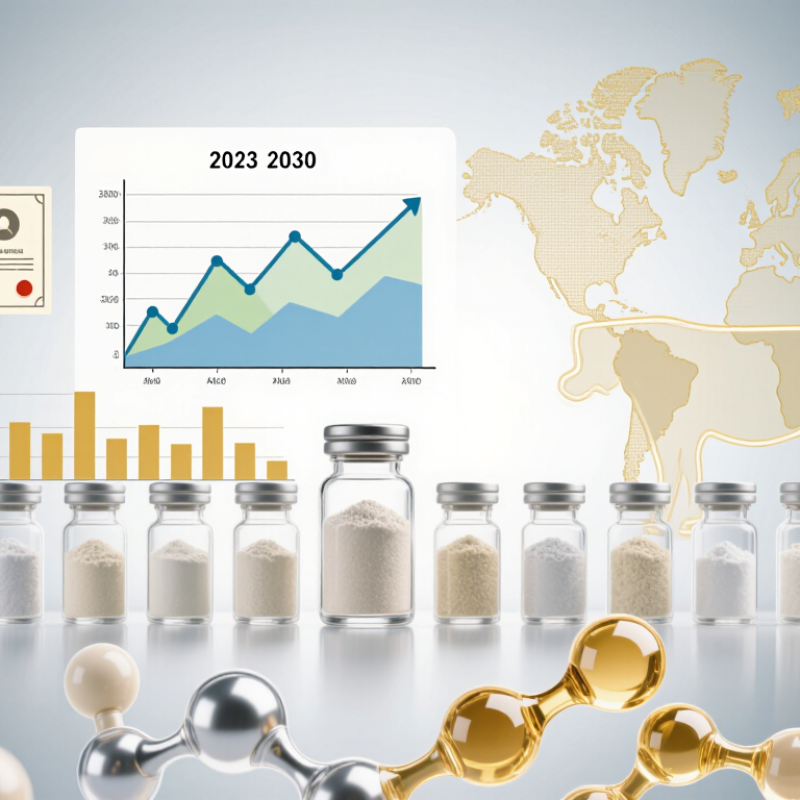
Bovine hydrolysed collagen is collagen broken into smaller peptides through controlled enzymatic hydrolysis. It usually comes from cattle hide or bone. The process improves dispersibility in water and may support easier digestion. However, hydrolysis does not create a new collagen type. It changes the peptide size and functional performance.
Bovine collagen mainly contains Type I collagen, with smaller amounts of Type III. Type I provides tensile strength in skin, bone, and tendons. Type III supports flexible tissues and often occurs beside Type I. In practical formulation work, I check the source tissue, hydrolysis method, peptide profile, moisture, and microbiological results. The label alone is not enough. Molecular weight matters, but lower is not automatically better.
The market is expanding quickly. Grand View Research estimated the global collagen market at about USD 9.12 billion in 2023, with continued growth expected through 2030. Fortune Business Insights also identifies bovine collagen as a major source segment in commercial collagen applications. These figures describe market value, not clinical effectiveness. That distinction is important. Reports also use different definitions, so their numbers cannot be compared perfectly. A serious buyer should request a certificate of analysis, amino-acid profile, heavy-metal testing, and traceability records. Small differences in processing can change solubility, odor, and peptide distribution. That part is often underestimated.
2026 Best Bovine Hydrolysed Collagen Type for Global Buyers
How Bovine Collagen Is Sourced and Hydrolysed
Bovine collagen usually begins with hides, bones, and connective tissue from inspected cattle. Responsible suppliers document the farm, slaughterhouse, transport route, and processing site. This chain matters because clean sourcing affects odor, color, ash, and microbiological performance. The FAO Statistical Yearbook 2023 reports more than one billion cattle worldwide, but supply volume does not equal suitable collagen quality. Regional traceability still varies. That is an uncomfortable gap.
Hydrolysis converts collagen into shorter peptides using controlled enzymes, heat, or both. Manufacturers normally monitor pH, temperature, reaction time, solubility, and peptide distribution. A lower average molecular weight often improves dispersibility in cold beverages, yet it does not automatically prove better bioavailability. The 2024 MarketsandMarkets collagen report identifies collagen peptides as a major growth segment, driven by nutrition and functional food applications. Buyers should request peptide-size data, amino-acid profiles, heavy-metal results, pathogen testing, and batch-to-batch certificates. One specification sheet is not enough.
Tips: Ask whether the material comes from hides or bones. Confirm the hydrolysis method and target molecular-weight range. Review at least three recent laboratory reports. Check halal, kosher, allergen, and country-specific documentation before ordering. Taste and solubility tests remain essential; laboratory numbers cannot fully predict a finished drink’s mouthfeel.
2026 Best Bovine Hydrolysed Collagen Type for Global Buyers
Selecting the best bovine hydrolysed collagen type starts with the intended use, not a sales claim. A beverage formula may need rapid dispersion, while capsules may tolerate different particle characteristics. Ask for traceability from cattle source to finished powder. Processing records should show enzymatic hydrolysis controls, drying conditions, and lot identification. A low average molecular weight is not automatically better. The full molecular weight distribution matters more for consistent formulation and testing.
Quality evidence should include amino acid profiling, peptide-size data, moisture, ash, microbiological limits, and heavy-metal results. Confirm methods, laboratories, and test dates, rather than accepting a single certificate. Clear batch records often reveal more than polished product language. Check solubility in the actual formula, including cold water, acidity, minerals, and sweeteners. Taste and odor deserve practical trials; a faint animal note can become obvious after storage.
Global buyers also need reliable compliance files. Review allergen statements, country-of-origin documents, food-contact packaging details, and applicable religious or market requirements. Verify whether the material suits food, supplement, or cosmetic use in the destination market. Claims about skin, joints, or absorption should match accepted evidence and local rules. Supplier audits can expose weak sanitation controls or poor warehouse humidity management. One limitation remains: laboratory results represent sampled lots, not every future shipment. Build acceptance criteria, retain samples, and repeat testing when the risk justifies it.
| Quality Dimension | Preferred 2026 Benchmark | Why It Matters to Global Buyers | Verification Method | Buyer Priority |
|---|---|---|---|---|
| Primary collagen type | Type I dominant; Type III may be naturally present depending on the bovine raw material and processing route | Type I is the principal structural collagen in bovine hide and is widely used in beauty, joint and protein formulations | Validated source documentation and, where required, peptide or protein characterization testing | Essential |
| Raw-material source | Traceable bovine hides or approved bovine connective tissue from legally controlled supply chains | Supports traceability, regulatory review, religious compliance and responsible sourcing requirements | Lot traceability records, supplier declarations, veterinary documentation and origin records | Essential |
| Hydrolysis degree | Consistent enzymatic hydrolysis with a documented peptide-size distribution; no universal single value is suitable for every application | Peptide-size distribution influences solubility, viscosity, sensory profile and formulation performance | Size-exclusion chromatography, HPLC or an equivalent validated analytical method | High |
| Average molecular-weight profile | Common commercial hydrolysed collagen products are often specified in the low-kilodalton range, frequently about 1–5 kDa; the full distribution is more informative than the average alone | A lower and consistent molecular-weight profile generally supports rapid dissolution and easier use in beverages and powders | SEC-HPLC or equivalent validated peptide-distribution analysis | High |
| Protein content | Typically at least 90% protein on a dry basis for a high-purity hydrolysed collagen ingredient, subject to the agreed specification | Confirms concentration and helps buyers compare cost per gram of actual collagen protein | Validated nitrogen or protein assay, with moisture reported separately | Essential |
| Amino-acid profile | Glycine, proline and hydroxyproline should be prominent; hydroxyproline is commonly used as a collagen identity indicator | Helps distinguish collagen-derived protein from ordinary protein powders and supports identity testing | Amino-acid analysis and hydroxyproline testing using validated laboratory methods | High |
| Solubility and dispersibility | Rapid dispersion in the intended application at the target dosage, with minimal sediment or persistent agglomeration | Improves consumer experience and reduces manufacturing problems in powders, sachets and ready-to-mix beverages | Application-specific bench testing under defined temperature, pH, time and dosage conditions | High |
| Moisture and water activity | Moisture commonly controlled at 8% or below, with water activity low enough to support the agreed shelf-life specification | Controls caking, flowability, storage stability and microbial-growth risk | Moisture analysis and water-activity measurement on representative lots | High |
| Microbiological safety | Pathogens such as Salmonella and Escherichia coli absent in the tested sample; total counts must meet the destination-market specification | Required for consumer safety and import clearance, with limits varying by product category and jurisdiction | Accredited-laboratory microbiological testing and current certificate of analysis | Essential |
| Heavy metals and contaminants | Lead, cadmium, mercury, arsenic and other relevant contaminants should comply with the importing market's legal limits | Limits differ by country, intended use and food or supplement classification | ICP-MS or equivalent validated elemental analysis, plus contaminant screening where applicable | Essential |
| BSE/TSE and animal-health controls | Documented controls demonstrating compliance with applicable bovine-origin safety requirements | Often required for customs, regulatory approval and customer due diligence | Official declarations, veterinary certificates, risk assessments and traceability documentation | Essential |
| Religious compliance | Halal and/or Kosher status documented when required by the target market or end customer | Expands market access and reduces the risk of rejected claims or shipments | Current certificates covering raw materials, processing aids, production site and product scope | High |
| Food-safety management | Manufactured under a recognized HACCP-based or GFSI-benchmarked food-safety system | Demonstrates controlled production, hazard management and audit readiness | Valid third-party certificate, audit report or equivalent documented evidence | Essential |
| Sensory profile | Low odour, low bitterness and a neutral-to-mild taste appropriate to the final formulation | Reduces the need for masking flavours and supports repeat consumer use | Controlled sensory panel testing in the intended finished-product matrix | Medium to High |
| Packaging and shelf life | Moisture-barrier packaging, clear storage conditions and a validated shelf life supported by stability data | Protects powder flow, quality and compliance during international transport and storage | Packaging specification, real-time or accelerated stability data and transport-risk assessment | High |
| Documentation and lot consistency | Complete specification, certificate of analysis, allergen statement, non-GMO statement where relevant, traceability records and change-control process | Enables regulatory submissions, quality release, audits and consistent product performance across batches | Document review, retained-sample testing and periodic independent verification | Essential |
Global buyers increasingly prefer hydrolysed bovine Type I collagen because enzymatic processing supports easier digestion and consistent peptide handling. Grand View Research estimated the global collagen market at approximately USD 10.3 billion in 2023, with continued growth expected through 2030. Market growth, however, does not prove product quality.
Safety begins with controlled cattle sourcing and documented slaughterhouse approval. Suppliers should verify BSE and TSE controls, veterinary records, and country-of-origin details. Each production lot needs testing for Salmonella, E. coli, total plate count, heavy metals, moisture, and prohibited residues. Identity testing should include hydroxyproline content, amino-acid profiling, and peptide molecular-weight distribution. Testing must be independent.
Traceability should connect the finished powder to collagen extraction, hydrolysis, drying, packaging, and transport records. A certificate of analysis helps, but it is not complete evidence. Buyers should review laboratory accreditation, sampling methods, and result dates. FDA dietary supplement cGMP requirements under 21 CFR Part 111 and EU food-safety controls create different documentation expectations. Codex HACCP principles also support preventive control.
I would not accept a polished certificate without raw data. That assumption is weak. Suppliers can still miss contamination during repacking or transport, so audits and retained samples remain necessary.
2026 Best Bovine Hydrolysed Collagen Type for Global Buyers
Global buyers usually choose bovine hydrolysed collagen Type I for its broad formulation flexibility. It dissolves well in powders, sachets, tablets, and ready-to-mix beverages. Supplier evaluation should begin with traceability, not price alone. Ask for the animal source, processing location, batch records, and current certificates of analysis. Reliable suppliers should provide identity, purity, microbiological, heavy metal, and moisture testing. Independent laboratory verification adds confidence, especially for international shipments. Halal, kosher, allergen, and regional compliance documents may also affect market access.
Format must match the application. Fine powder suits instant drinks, while larger particles may improve handling during industrial blending. Low-odor material helps beverage developers protect the final taste. Cosmetics manufacturers may prefer consistent molecular distribution and clear solubility data. Food companies should review viscosity, protein content, packaging stability, and recommended storage conditions. A supplier can offer impressive specifications, yet poor documentation still creates risk. That is an uncomfortable but practical lesson.
Tips: Request a recent sample and test it in the real formula. Check dissolution after ten minutes, not only in laboratory water. Compare three batches when possible. Confirm packaging protects the product from heat and moisture. Do not assume every “Type I” material performs identically. Application results can change with pH, minerals, sweeteners, and processing temperature. A transparent supplier will explain limitations instead of promising perfect performance.
Global buyer criteria for suppliers, formats, and applications
DENTSPLY Maillefer - USA
5100 E. Skelly Drive, Suite 300
Tulsa, Oklahoma 74135
DENTSPLY Maillefer - Canada
161 Vinyl Court
Woodbridge, ON L4L 4A3
Toll-free in the U.S.:
1-800-924-7393
Toll-free in Canada:
1-800-263-1437
Toll-free in the U.S.:
1-800-924-7389
Toll-free in Canada:
1-888-336-8775